
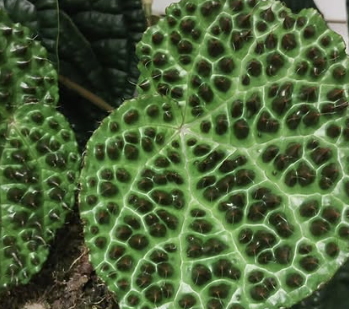
Begonia melanobullata is a tropical plant that stands out in any indoor plant collection.
Native to the Cao Bang province of northern Vietnam, this species belongs to a group of striking plants that includes begonia ferox. It grows in the shady forest floor, where it enjoys warm temperatures, high humidity, and filtered sunlight. Its leaf shape, dotted with textured black bullae and tiny white hair, gives it a distinctive appearance that’s hard to ignore.
With the right care, begonia melanobullata can thrive indoors and become a captivating addition to your living room or shelf. Let’s explore the steps to help your plant stay healthy and vibrant.
Light
Begonia melanobullata prefers bright, indirect light.
Avoid direct sunlight, as it can scorch the leaves and cause permanent damage. Filtered sunlight or natural light from a north-facing window is ideal.
Artificial light, like LED grow lights, can support growth in low-light areas. Rotate the plant regularly to encourage even growth. Insufficient light may lead to leggy growth and loss of vibrant colors.
Temperature
The best temperature range for begonia melanobullata is between 18–24°C (64–75°F).
It grows well in warm conditions and does not enjoy sudden temperature fluctuations or cold drafts.
Avoid placing the plant near windows in cold climates or areas where it might be exposed to cooler temperatures during winter months. Keep the plant in a stable environment for healthy growth.
Humidity
High humidity levels are essential. Aim for a humid environment above 60%.
A pebble tray filled with water placed under the nursery pot helps maintain local moisture. A humidifier also works well, especially in dry indoor settings. Regular misting can help too, though avoid getting the leaves too wet.
Moisture sitting on leaves may invite powdery mildew or fungal issues.
Location
Choose a quiet, stable spot with gentle natural light.
Keep it away from cold drafts, radiators, and heat vents. A living room, home office, or bathroom with filtered light works well.
Make sure the plant has ample space around it to encourage airflow and avoid fungal problems.
Watering
Water when the top inch of soil feels dry. Use filtered or rainwater for best results. Avoid excessive water and never let the plant sit in standing water. Water thoroughly and allow any excess to drain from the bottom of the pot.
Proper watering prevents root rot and supports a strong root system. During the plant’s dormant period in winter months, reduce the frequency slightly.
Feeding
Feed begonia melanobullata with a balanced, water-soluble fertilizer at half strength. Apply during the growing season, from spring through early autumn.
Feeding every 4–6 weeks is enough. Avoid over-fertilizing, as salt buildup can damage roots. Flush the soil occasionally to prevent nutrient overload.
Soil
Use a well-draining soil mix with good aeration. A mixture of peat moss, sphagnum moss, perlite, and orchid bark is ideal. The soil should hold some moisture but never stay wet.
Slightly acidic soil pH supports best growth. Always choose pots with a drainage hole to prevent excess water from sitting at the bottom of the pot.
Pruning
Prune to remove dead or damaged leaves and to encourage new growth.
Use clean, sharp scissors. Trim back any leggy stems to maintain shape. Wipe leaves with a damp cloth to remove dust and highlight their unique dark foliage. This also helps you spot early signs of pests.
Pests
Like many tropical begonia species, begonia melanobullata can attract spider mites, mealybugs, and aphids. High humidity often keeps spider mites away, but regular checks are important.
If pests appear, treat with neem oil or insecticidal soap. If pests become a problem, diluted hydrogen peroxide can help control larvae in the soil while improving root oxygen levels. Keep leaves clean and avoid overcrowding your plants. Good pest control habits help avoid long-term damage.
Propagation
The best way to propagate begonia melanobullata is through stem cuttings.
Take a healthy stem with several nodes.
Place it in moist sphagnum moss or water until roots form.
Then move the new plant to a small decorative pot with well-draining soil.
Keep it warm and humid to encourage early root development.
Propagation works best during the growing season.
General Care Tips
- Avoid direct sunlight to prevent leaf burn.
- Maintain warm indoor temperatures.
- Keep humidity high using pebble trays or a humidifier.
- Let the top inch of soil dry before watering.
- Use filtered or rainwater for best results.
- Feed with a diluted fertilizer every few weeks.
- Prune regularly to encourage bushy, healthy growth.
- Inspect often for pests.
- Choose a pot with proper drainage.
With the right care, begonia melanobullata is an easy care plant.
It grows slowly but rewards patience with a jaw-dropping mix of textures and deep colors. Its petal-less flowers are small and female flowers often appear during its active phase.
Keep it in the right conditions and it thrives as a long-time family member.
FAQ
Is begonia melanobullata safe for pets?
No. This plant contains oxalic acid. Keep it out of the reach of children and pets. Contact with the sap may cause irritation or stomach issues.
Why are my begonia leaves turning yellow?
This usually means too much water or poor light. Check soil moisture and move the plant to a brighter location with indirect light.
How do I know if I’m overwatering?
Wet soil, drooping leaves, or dark spots can all be signs of overwatering. Make sure the pot drains well and allow the top inch of soil to dry out.
Can begonia melanobullata survive in low light?
It prefers medium to bright indirect light. Low light may cause leggy growth and faded color.
What are the dark cones or black bullae on the leaves?
These textured spots are normal and give the plant its unique look. They are not signs of disease.
What’s the best time to repot this plant?
Spring is ideal. Use a slightly larger pot and refresh the soil mix. Be gentle with the root system.
Other Types of Begonia to Consider
- Begonia ferox – Very similar in appearance, with bold black bullae.
- Begonia maculata – Known for its polka-dotted leaves. (Find a fool proof care guide here).
- Begonia rex – Offers vibrant colors and unique leaf patterns.
- Begonia masoniana – The “Iron Cross” begonia with a textured surface.
- Begonia luxurians – Palm-like foliage for a dramatic touch.
Each of these offers a different look and growth habit. Together with begonia melanobullata, they form a beautiful, textured indoor garden.
Begonia melanobullata is a striking plant with unique dark foliage and detailed textures.
It’s slow-growing but full of charm. With proper watering, filtered sunlight, and high humidity, it becomes a popular choice for plant lovers.
Take time to understand its needs. You’ll enjoy a healthy, vibrant plant that becomes a talking point in your indoor plant collection.