
Begonia plants are some of the most popular houseplants for a home gardener. They are loved for their shiny green leaves, bright white flowers, and bold foliage. There are many types, including wax, Pavonina, Melanobullata, rex, polka dot, and angel wing, also known as cane begonia. While each type is slightly different, they all need the best soil to grow well and stay healthy.
Begonias are tropical plants. They prefer warm temperatures, indirect light, and the right humidity. The correct soil prevents root rot, supports new growth, and keeps the plant’s health strong.
If you are new to plants and struggling with soil, read my post The Beginners Guide To Understanding Soil.
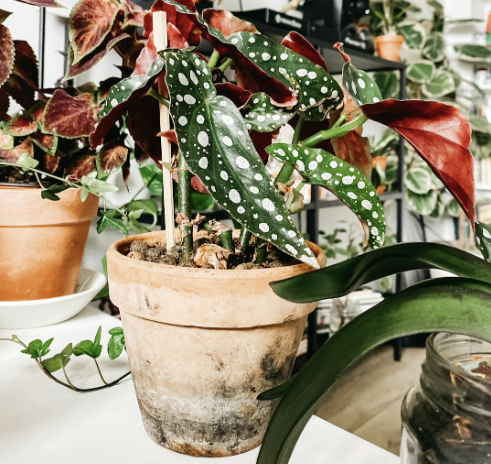
What Soil to Use for Begonia
The best soil is light, airy, and well-drained. It should hold some moisture but never stay soggy. Begonias do not like wet soil sitting around their roots. Too much water leads to fungal diseases and root rot.
A good soil mix is:
- Equal parts peat moss or coco coir
- One part perlite
- A small amount of compost
This mix creates a light soil mix that drains well but still provides essential nutrients during the growing season. Fresh soil is always better than compacted old soil.
What Soil Not to Use for Begonias (And Why)
Do not use heavy garden soil. It compacts easily and blocks airflow to the plant’s roots. Avoid dense potting medium without drainage material, as it traps excess water. Soggy soil is one of the biggest causes of root rot in these plants.
Never plant begonias in pots without drainage holes. Poor drainage harms the plant’s health quickly.
Components of Good Begonia Soil
Peat moss or coco coir helps hold moisture while keeping the soil slightly acidic. Perlite improves drainage and prevents soil from becoming too heavy. A small amount of compost adds organic matter and nutrients without overwhelming the plant.
The goal is balance. Begonias need moisture, but not too much water. They need nutrients, but not rich soil.
Drainage, pH, and Nutrient Balance
Begonias prefer slightly acidic soil conditions. They grow best in well-drained soil with good air circulation around the roots. During the growing season, you can feed with a diluted liquid fertilizer, such as a balanced 3-1-2 formula. Always use it at half strength.
Too much fertilizer can damage the roots and reduce new growth. Proper care means giving enough nutrients without overfeeding.
Planting Begonias in Pots
Planting in pots is the best way to control soil and water. Small pots often work well, especially for young plants. Many begonias, including rhizomatous and tuberous, prefer shallow pots because their roots do not grow very deep.
Plastic pots hold moisture longer, which helps in dry homes. Clay pots dry faster and may suit homes with high humidity. Always choose pots with drainage holes.
When planting, place the root ball level with the surface of the soil. Press gently and water lightly with distilled water. Keep the plant in indirect sunlight for a few days after planting.
Best Time to Plant or Repot a Begonia
The best time to repot begonias is early spring or late spring, just before strong new growth begins. Avoid repotting during cooler months unless necessary. Repot every one to two years to refresh the potting medium and support healthy roots.
How to Care for a Begonia After Planting
Begonias prefer indirect light or partial shade. Some wax types can tolerate full sun outdoors, but most indoor types grow best in indirect sunlight. Keep them in a warm spot with good air circulation.
Water begonia when the top few centimetres of the soil feel dry. They prefer slightly moist soil, not wet soil. Use less water during winter months when growth slows.
Maintain the best humidity for foliage types like begonia rex. High humidity supports bushier growth and strong leaves. Watch for spider mites, scale insects, and powdery mildew, especially in dry air.
Read my begonia posts for the full care guide:
Begonia Pavonina – How To Care for this Peacock Beauty
How to Care for Begonia Melanobullata: The Complete Guide
Fool Proof Guide for a Wonderful The Polka Dot Begonia
Signs of Inadequate Soil
Yellow leaves often mean excess water or poor drainage. Soft stems may signal root rot. If soil stays soggy, roots cannot breathe. Weak plants are more likely to attract various pests.
Healthy begonias have firm stems, shiny green leaves, and steady new growth.
Frequently Asked Questions
What is the best soil mix for begonias?
The best soil mix for begonias is equal parts peat moss or coco coir and perlite, with a small amount of compost. The soil should be light and well-drained to prevent root rot while still holding some moisture.
Do begonias need ericaceous soil?
Begonias prefer slightly acidic soil, but they do not require special ericaceous soil. A light, well-drained mix with peat moss or coco coir is usually enough.
Is 3-1-2 fertilizer good for begonia?
Yes, a balanced 3-1-2 liquid fertilizer works well during the growing season. Always dilute it to half strength to protect the plant’s roots.
Do begonias like shallow or deep pots?
Most begonias prefer shallow pots because their root systems are not very deep. Small pots with drainage holes are usually the best choice.
Do begonias prefer wet or dry soil?
Begonias prefer slightly moist soil. Let the top few centimetres dry before watering again. They do not tolerate soggy soil.
Do coffee grounds help begonias?
Coffee grounds are not recommended. They can hold too much moisture and upset the soil balance. A proper potting mix is safer and more reliable.