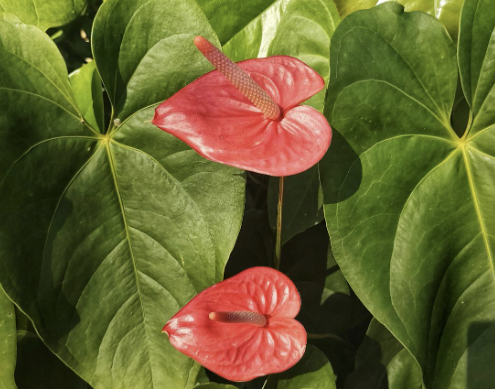
Anthurium plants are beautiful, easy-to-care-for houseplants that bring vibrant colors and a tropical feel to any indoor space. Also called the “Flamingo Flower” or “Laceleaf,” this plant is known for its glossy, heart-shaped leaves and bright red, pink, or white flowers.
Not only is it a low-maintenance choice, but it also blooms year-round with the right care! Here’s everything you need to know to help your Anthurium thrive.

Why Have Anthurium Plants?
Anthuriums are perfect if you’re looking for a plant that adds a pop of color and an exotic touch to your home.
They have long-lasting flowers that make them unique, and because they’re relatively easy to care for, they’re ideal for beginners or anyone looking to add some tropical flair to their plant collection.
The name “Anthurium” comes from Greek words meaning “flower” and “tail,” which is fitting because of their flower shape.
How to Identify Anthurium Plants
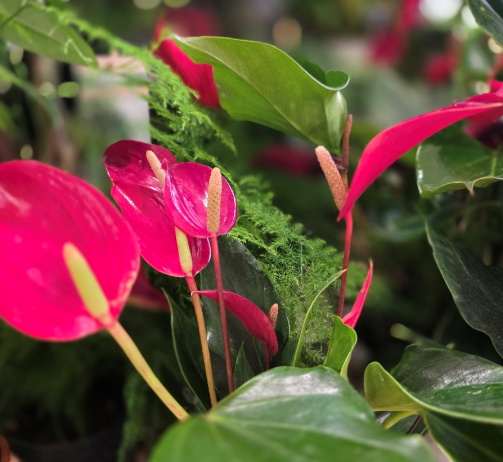
Anthurium plants are easy to recognize with their glossy, heart-shaped leaves and vibrant “flowers,” which are actually modified leaves called spathes.
These spathes surround a spike called a spadix, which contains the plant’s tiny true flowers. Most commonly, they come in shades of red, pink, and white, but some species have purple, green, or multicolored spathes.
Size
Anthuriums typically grow to about 12-18 inches in height and width when grown indoors. With the right care, they can reach up to 2 feet, making them a stunning statement piece in your home.
Light Requirements
Anthuriums prefer bright, indirect light. Direct sunlight can scorch their leaves, so place them near a window that gets filtered light. If you don’t have bright natural light, they can tolerate lower light conditions, but they may bloom less. A spot near a north or east-facing window is usually perfect for these plants.
Water Needs
Anthuriums like their soil to be kept slightly moist but not soaked. Water them when the top inch of soil feels dry, typically once a week. Be careful not to overwater, as this can lead to root rot. Yellowing leaves are usually a sign of too much water, while drooping leaves may mean it’s too dry.
Temperature
This tropical plant does best in temperatures between 65-80°F, which makes it a great indoor plant.
Avoid temperatures below 55°F and keep it away from cold drafts, air conditioning, and heaters.
Humidity
Anthuriums love high humidity, ideally around 60-80%.
If your home is dry, you can mist the plant regularly, place it on a humidity tray, or even keep it in a bathroom or kitchen where humidity levels are naturally higher. Using a small humidifier near your Anthurium is also a great way to ensure it gets the moisture it needs.
Soil
A well-draining, chunky potting mix is ideal for Anthuriums.
These plants prefer a mix that allows good airflow to the roots, so a combination of orchid bark, perlite, and regular potting soil works well. A soil that mimics the rainforest floor, light and aerated is ideal for this plant.
Fertilizer
During the growing season (spring and summer), feed your Anthurium with a balanced liquid fertilizer diluted to half strength once a month. Anthuriums aren’t heavy feeders, so avoid over-fertilizing, which can lead to salt buildup and damage the roots.
Potting
Anthuriums prefer a pot that provides good drainage. Terra cotta pots work well because they allow extra moisture to evaporate. Repot your Anthurium every 2-3 years or whenever it becomes root-bound. Choose a pot that is one size up from its current pot to give the roots room to grow.
Pruning
Prune away any dead or yellowing leaves to keep the plant looking fresh and encourage new growth. If your Anthurium flowers start to fade or die, you can trim them back to help the plant focus its energy on producing new blooms.
Propagation
Anthuriums can be propagated by division. Simply remove the plant from its pot, carefully separate the root clumps, and replant each division in its own pot. Stem cuttings are also an option but can take longer to establish.
Pests affecting the Anthurium Plants
While generally resistant to pests, Anthuriums can occasionally attract:
Aphids: Small green or black bugs that suck the sap from leaves. You can wash them off with a gentle spray of water or treat the plant with neem oil.
Mealybugs: White, cotton-like insects that can gather on stems and under leaves. Dab them with a cotton swab dipped in rubbing alcohol to remove them.
Spider Mites: Tiny, red or brown pests that create fine webs on the plant. Increase humidity and spray the plant with insecticidal soap to control an infestation.
If pests become a problem, diluted hydrogen peroxide can help control larvae in the soil while improving root oxygen levels.
Diseases affecting the Anthurium Plants
Root Rot: Caused by overwatering or poor drainage. If you notice a foul smell or mushy roots, trim away any affected roots, repot in fresh soil, and reduce watering.
Leaf Blight: Dark brown or black spots can develop on leaves due to bacterial infection, often from too much moisture on the leaves. Remove any affected leaves and improve air circulation around the plant.
Are the Anthurium Plants Toxic?
Yes, Anthuriums are toxic to pets and humans if ingested. They contain calcium oxalate crystals that can cause irritation and swelling if chewed or swallowed, so keep them out of reach of curious pets or young children.
Common Issues affecting Anthurium Plants
Yellow Leaves: Often caused by overwatering or insufficient light.
Brown Tips: Usually a sign of low humidity or too much direct sunlight.
No Flowers: Lack of blooms can be due to insufficient light or too much fertilizer. Try adjusting the plant’s location or reducing feedings.
Difficulty Level of Anthurium Plants
Anthuriums are relatively easy to care for, especially once you get the hang of their water and humidity needs. They’re perfect for intermediate plant owners or beginners willing to put in a little extra care.
What Species to Select
While Anthurium andraeanum (the common red-flowered Anthurium) is the most popular variety, other species include:
Anthurium crystallinum: Known for its stunning, velvety, heart-shaped leaves with white veins.
Anthurium clarinervium: Similar to crystallinum, with dark green, velvety leaves and striking veins. Each variety has slightly different care needs, but all benefit from similar lighting, humidity, and soil conditions.
Final Thoughts on the Anthurium Plant
Anthuriums are stunning plants that bring color and tropical vibes to any room. With the right amount of light, water, and humidity, your Anthurium will thrive and bloom, adding a unique, exotic look to your indoor garden. Follow these care tips, and your Anthurium will be a beautiful and happy addition to your plant family.