
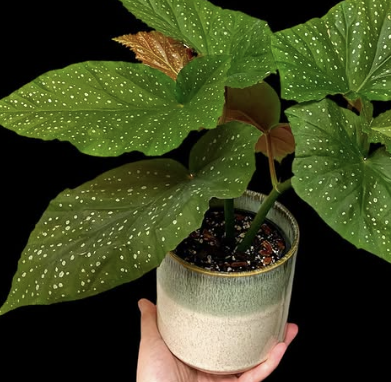
If you want a bold but easy houseplant, begonia lucerna is a perfect choice. This tall begonia brings drama, color, and charm into any room. Even better, it is simple to care for once you understand its basic requirements.
Also known by its full name, Begonia corallina de Lucerna, this plant is part of the cane begonias group. Many people call it an angel wing begonia plant because of its beautiful leaf shape. With dark green leaves, small silver spots, and a red underside, it stands out from other indoor plants.
So, let’s walk through everything you need to know about begonia lucerna care. By the end, you will feel confident growing healthy plants that bloom year after year.
Background
Begonia lucerna is one of the most popular cane begonias grown indoors. It is a hybrid that comes from Begonia coccinea, which explains its tall growth and strong stems.
Like many species of begonia, it is considered a tender perennial. That means it does not tolerate cold weather well. In most regions, it grows best indoors where conditions stay steady.
It has bamboo-like stems and fibrous roots. As it matures, it can become a tall begonia with large clusters of soft pink blooms during the growing season.
Types of Cane Begonias
Cane begonias are known for their upright growth and long stems. They are easy to spot because of their wing-shaped leaves.
Some well-known begonia varieties include:
- Begonia maculata (also called polka dot begonia)
- Dragon wing begonia
- Begonia coccinea
- Begonia lucerna
While these various species look slightly different, they share similar light conditions and watering needs.
Light Requirements for Begonia Lucerna
Light is one of the most important parts of begonia lucerna care. This plant loves bright indirect light. It needs lots of bright light to bloom well. However, direct sunlight can scorch those dark green leaves.
So, place your plant near a bright window with filtered light. A little bit of gentle morning sun is fine. Strong afternoon rays are not.
If your home feels dark, especially in winter months, consider using a grow light. This helps when there is not enough sunlight. Without enough sunlight, blooming slows down and growth becomes weak.
If you notice yellow leaves, double check your light conditions. Too much light or too little can both cause stress.
Watering Needs for Begonia Lucerna
Watering is where many people struggle. The best way to water begonia lucerna is to keep the soil moist but never soggy.
Too much water leads to root rot. Too little water causes brown edges and drooping lower leaves. Always check soil moisture before watering. If the top inch feels dry, it is time to water.
Water slowly from the top and allow full drainage. Never let the plant sit in standing water. Healthy roots need air as much as moisture.
If possible, use rain water instead of tap water. Tap water can leave mineral build-up over time. However, if tap water is your only option, let it sit out overnight first.
Temperature Range and Ideal Conditions
Begonia lucerna prefers warmth. The best temperature range is between 65 and 75°F. It does not like sudden drops in current weather.
Keep it away from drafts and cold windows during winter months. Also avoid placing it near heaters, as dry conditions can cause stress.
Stable warmth keeps the plant in good condition and supports steady new growth.
Humidity
This plant loves high humidity. Dry air often leads to brown edges and a sad-looking houseplant.
If your air is dry, especially in winter months, place the pot on a pebble tray. You can also group it with other indoor plants to raise humidity naturally.
Avoid heavy misting. Wet leaves may invite powdery mildew. Good air flow helps with disease prevention.
Fertiliser During the Growing Season
Feed your plant during early spring through late spring and summer. This is the growing season when new leaf growth appears.
Use a balanced liquid fertiliser every two to four weeks. This supports the plant’s nutrients and encourages blooms.
Stop feeding in winter months. The plant rests and does not need extra food then.
Soil
The soil must be well-draining soil. This prevents root rot and keeps the root system healthy.
Choose a mix with lots of organic matter. Adding coco coir or perlite improves drainage. Healthy roots create healthy plants.
A terracotta pot is helpful because it absorbs extra moisture. That makes it easier to manage watering needs.
When to Repot Begonia Lucerna and How
Repotting is best done in early spring. That is when the plant begins active growth.
Move it to a slightly larger pot, but not too large. A larger pot that holds too much water can harm healthy roots.
If you see roots circling the base, it is time for a new home.
Pruning for Fuller Growth
Pruning keeps your begonia lucerna looking tidy. It also helps create larger plants with stronger stems.
Trim back a long stem just above a leaf node. This encourages a new stem to grow. Remove tired lower leaves to improve air flow.
Pruning also helps reduce signs of distress and supports disease prevention.
Propagation: The Best Way to Make New Plants
Propagation is simple and rewarding. Take stem cuttings during spring.
Cut just below a leaf node and place the cutting in water or moist soil. Roots will grow from the node. Once roots form, plant it in soil and watch new growth appear.
Soon you will have new plants to share with friends.
Seasonal Care Tips
During the growing season, provide bright indirect light, steady watering, and regular feeding. In winter months, reduce watering and stop fertiliser.
Protect the plant from cold weather and sudden environmental factors. Adjust care based on current weather and indoor conditions.
How to Encourage Blooming in Begonia Lucerna
To get large clusters of blooms, the plant needs enough sunlight. Lots of bright light is key.
Place it in a brighter spot if it is not flowering. Feed during the growing season and avoid stress from dry conditions.
Healthy plants bloom more often than stressed ones.
Common Problems and Signs of Distress in Begonia Lucerna
Yellow leaves often mean too much water. Brown edges usually signal low humidity. If leaves feel soft, check for root rot.
Powdery mildew appears as white dust on leaves. Improve air flow and reduce excess moisture.
Keeping your plant in the best growing conditions prevents most issues.
Common Pests affecting Begonia Lucerna
Like many indoor plants, begonia lucerna can attract spider mites and other common pests.
Spider mites thrive in dry air. Increase humidity and wipe leaves gently if needed. Regular checks help catch problems early.
Is Begonia Lucerna Pet Friendly?
No, it is not pet friendly. Begonias fall under toxic plants weeds plants for cats and dogs.
Keep it out of reach of any curious family member with paws.
Other Begonia Types to Try
If you love begonia lucerna, you may also enjoy:
- Begonia maculata
- Dragon wing begonia
- Other cane begonias
- Begonia Melanobullata
- Begonia Pavonina
Each has unique leaf patterns but similar care needs.
Frequently Asked Questions
How do you care for a Lucerna begonia?
Place it in bright indirect light, keep soil moist but not soggy, and feed during the growing season. Provide high humidity and steady warmth.
What should I do with my begonias in the winter?
Reduce watering, stop fertiliser, and protect from cold weather. Move to a brighter spot if light levels drop.
Do begonias need full sun or part shade?
They prefer bright indirect light or partial shade. Direct sunlight can burn leaves.
Do begonias do better in pots or in the ground?
Begonia lucerna grows best in pots indoors. In warm climates, it can grow outside in partial shade.
How to get begonia lucerna to bloom?
Provide lots of bright light, regular feeding in spring and summer, and stable warmth. Healthy plants bloom more reliably.
Should you water begonias from the top or bottom?
Water from the top and allow proper drainage. Avoid letting the pot sit in water.
Do coffee grounds help begonias?
A small amount of coffee ground adds organic matter. However, too much can upset soil balance. Compost is usually a safer choice.
Begonia lucerna is bold, beautiful, and surprisingly forgiving. Once you learn its watering needs and light conditions, it becomes easy to grow. Give it the right care, and this angel wing begonia will reward you with strong stems, healthy roots, and stunning blooms year after year.