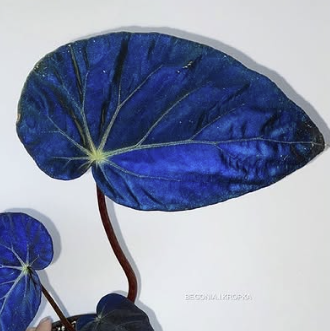
Some plants stop people in their tracks. Begonia pavonina is one of them. At first glance, the leaves look dark green. Then the light shifts. Suddenly, the plant flashes blue.
That blue glow feels unreal. It looks painted on. Yet it is completely natural. This is why Begonia pavonina is often called the peacock begonia or blue begonia.
Many plant lovers buy it for the color alone. Then panic sets in. The blue fades. Leaves dull. Growth slows. Most issues come down to light, humidity, and water.
This guide removes the guesswork. You’ll learn how to care for Begonia pavonina step by step. Each section focuses on what the plant needs to stay vibrant. With the right conditions, this plant becomes a true showpiece.
Love Begonias? Read my post How to Care for Begonia Melanobullata: The Complete Guide
Background Information: What Begonia Pavonina Is Known For
Begonia pavonina is a rare rhizomatous species native to Southeast Asia. It grows on forest floors under dense canopy cover. Light is soft. Humidity stays high.
Its famous blue iridescence is not pigment. It is structural color. Special cells reflect light at specific angles. This creates the attractive iridescent blue sheen.
This adaptation helps the plant survive low light conditions. It captures more light for photosynthesis. That is why care must mimic its natural habitat.
Light: How to Get the Blue Color on your Begonia Pavonina
Light is the most important factor. This is where most people go wrong.
Begonia pavonina needs low light or soft indirect light. Bright light washes out the color. Direct sun damages leaves fast.
To enhance the blue iridescence, place the plant in shaded areas. A north-facing window works well. Shelves away from windows are often better.
The darker the environment, the stronger the blue effect. This is why the dark form looks so dramatic. Too much light turns leaves green or bronze.
Avoid grow lights unless they are very weak. Filtered light is always safer.
Watering Needs
Begonia pavonina likes consistent moisture. It does not like wet soil.
Water when the top layer feels slightly dry. The soil should feel cool, not soggy. Wet soil leads to root issues fast.
Always water slowly. Let excess water drain fully. Good drainage protects the root system.
Use room temperature water. Cold water shocks roots. Distilled water helps prevent mineral buildup.
Temperature Requirements
This plant prefers stable warmth. Aim for 65°F to 75°F year-round.
Avoid cold drafts and sudden changes. Begonias react quickly to stress. Never place near open windows in winter. Avoid heaters and vents.
Humidity: A Non-Negotiable Need for Begonia Pavonina
High humidity is essential. This plant thrives in a humid environment.
Aim for 60% humidity at least, but 80% is preferred. Lower levels dull leaves and slow growth.
Terrariums work well. Bathrooms with filtered light also help. Grouping plants raises humidity naturally.
Pebble trays help slightly. Sphagnum moss placed nearby can boost moisture.
Good air movement matters too. Stagnant air causes fungal diseases.
Best Location in the Home for Begonia Pavonina
Choose shaded indoor spaces with stable conditions. Avoid bright rooms.
This plant works well as a decorative accent on shelves or cabinets. Keep it away from foot traffic.
Terrariums provide control and consistency. They reduce stress and improve color.
Soil Requirements
Well-draining soil is critical. Begonia pavonina hates soggy roots.
Use a loose mix with peat, perlite, and bark. Sphagnum moss improves moisture balance. Avoid alkaline soil. Slightly acidic soil supports healthy growth.
Never pack soil tightly. Roots need air.
Fertilizer Needs
This plant is a light feeder. Too much fertilizer causes damage.
Use organic fertilizers at half strength. Feed once a month during active growth.
Skip feeding in winter. Growth slows during this time.
Always water before fertilizing.
Pruning and Maintenance
Pruning keeps the plant tidy and healthy. Remove damaged or old leaves.
Cut near the base using clean tools. This encourages new growth.
Wipe leaves gently to remove dust. Do not polish leaves.
Propagation Methods
Propagation is possible but slow.
Stem cutting is the easiest method. Choose a healthy stem with nodes. Place it in moist soil or sphagnum moss.
Leaf cuttings also work but take longer. Keep humidity high at all times.
Roots form slowly. Patience is required.
Repotting
Begonia pavonina dislikes frequent repotting. It prefers to stay snug.
Only repot when roots outgrow the pot. Choose a slightly larger container.
Spring is the best time. Handle roots gently.
Common Diseases
Fungal diseases are the biggest risk. They thrive in wet soil and still air.
Leaf spot and mildew appear as dark patches. Improve airflow and reduce moisture.
Remove affected leaves quickly.
Pests to Watch For
Spider mites and mealybugs are common. They hide under leaves.
Check plants weekly. Early action prevents spread.
Use rubbing alcohol on cotton pads if needed. Or hydrogen peroxide mixed with water can help clean the soil and protect roots.
Toxicity Information of Begonia Pavonina
Begonia pavonina is toxic to pets if ingested. Keep away from cats and dogs.
Wear gloves if you have sensitive skin.
How to Encourage Blooming
Flowers are small and subtle. The leaves remain the main attraction.
Provide stable care and high humidity. Avoid stress.
Blooms usually appear during active growth periods.
Common Problems and Solutions for Begonia Pavonina
Leaves losing blue color means too much light. Move to a darker spot.
Crispy edges signal low humidity. Increase moisture immediately.
Wilting often means root issues. Check drainage and soil moisture.
FAQs About Begonia Pavonina
How do you propagate Begonia pavonina?
Propagation works best with stem cuttings in moist soil or sphagnum moss.
What is the dark form of Begonia pavonina?
The dark form shows deeper bronze leaves with stronger blue iridescence.
Can Begonia pavonina grow in a terrarium?
Yes. Terrariums provide ideal humidity and stable conditions.
Can I enhance the color of Begonia pavonina?
Yes. Reduce light and increase humidity to boost blue tones.
What makes Begonia pavonina iridescent?
Special leaf cells reflect light, creating a blue sheen.
Can begonias survive winter indoors?
Yes, if kept warm and away from drafts.
Can begonia bulbs be saved?
Some begonias form tubers, but pavonina grows from rhizomes.
Are there health benefits to begonias?
They improve air quality and support mental wellbeing through visual calm.
Final Thoughts
Begonia pavonina is not a casual plant. It asks for attention. In return, it gives something rare.
That blue glow feels alive. It changes with light. It rewards patience.
When you meet its needs, this plant becomes unforgettable.