
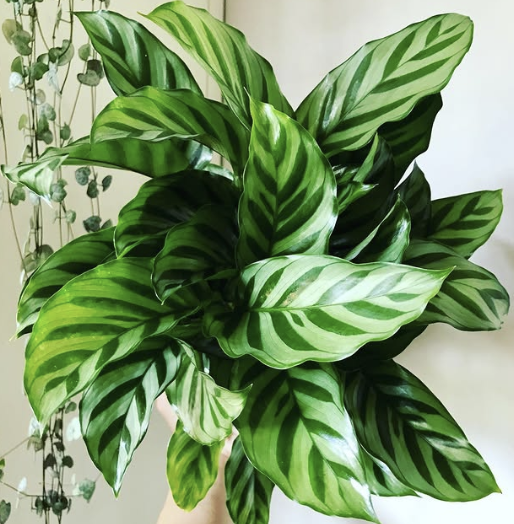
The Calathea Freddie brings soft stripes, fresh color, and a calm feel to any room.
It thrives when the light, water, and humidity stay steady, so simple care makes a big difference.
It may look delicate, but it’s possible to keep your calathea healthy with the right conditions.
Let’s take a closer look at how to give this plant the proper care it needs.
Calathea Freddie, also known as Calathea concinna ‘Freddie’, is one of the most popular houseplants from the calathea genus.
Part of the prayer plant family, it’s admired for its bold patterns and lush, tropical feel. Like other calathea plants, it closes its leaves at night and reopens them in the morning. This adds to its charm. With the right care, this plant brings lots of life to any indoor space.
Calathea Freddie, sometimes called a zebra plant or peacock plant, is native to the warm, humid forests of South America.
Its lance-shaped dark green leaves are marked with wavy, light green stripes that look like they’ve been painted on.
Light
Calathea Freddie grows best in medium to bright indirect light. It doesn’t like too much light. Direct sun can burn its delicate leaves.
For best results, place it near a north or east-facing window. If your only option is a west or south-facing window, use a sheer curtain to filter the light.
Low light is okay too. However, it may slow down new growth and reduce the plant’s vibrant color.
Also, rotate the plant regularly so it grows evenly.
Humidity
Calathea plants thrive in high humidity. Since their natural habitat is the rainforest, try to create a humid environment at home.
Dry air can cause leaf edges to brown and curl. Besides a humidifier, use a pebble tray filled with water.
Grouping tropical indoor plants together also helps increase moisture in the air. You could also place the plant in a bathroom with natural light.
Together with filtered water, high humidity keeps your calathea looking its best.
Location
Choose a spot away from cold drafts and sudden temperature changes. Keep your Freddie calathea away from radiators, air conditioners, and open windows during the winter months.
A spot with steady conditions and no harsh light works best. Next, remember to rotate the plant often. This helps it grow evenly and maintain its shape.
Temperature
Calathea Freddie enjoys warm temperatures that stay between 18–24°C (65–75°F). It does not like cold air.
Try not to let the room drop below 15°C (59°F), especially in winter. Sudden cold drafts or big changes in temperature can damage the plant’s leaves.
During colder days, keep it in a cozy, stable area for healthy growth.
Watering
This plant loves moist soil but hates wet feet. Water your calathea when the top 2–3cm (1 inch) of soil feels dry.
Pour water slowly until it drains from the bottom of the pot. Always empty any water collected in the saucer.
For best results, use distilled water, rainwater, or filtered water. Hard tap water can cause leaf edges to turn brown.
During the winter months, reduce watering slightly. Still, don’t let the soil dry out completely.
In fact, checking the soil often is the best way to avoid common problems.
Feeding
Feed your calathea Freddie every 4–6 weeks during the growing season (spring through early autumn). Use a general houseplant fertilizer at half strength.
Avoid feeding during the winter months. This is when the plant is resting.
Too much fertilizer can lead to brown edges and damage to the roots. Also, flush the soil now and then to prevent salt build-up.
Soil
The best soil for calathea plants is one that holds moisture but also drains well.
Use a mix that includes peat, coco coir, and perlite or orchid bark. Make sure your pot has a drainage hole to let out excess water.
Wet soil can lead to root rot and other common issues like fungus gnats.
In fact, the right potting soil makes a huge difference in the plant’s overall health.
Pruning
Trim yellow or brown leaves regularly to keep the plant looking tidy. Use clean scissors or pruning shears to remove dead or damaged leaves.
This helps redirect energy to new growth. It also keeps your calathea looking fresh.
Wipe the leaves with a damp cloth to remove dust and boost their shine. Do not use commercial shine products.
Besides pruning, regular leaf care supports healthy new leaves.
Pests
Calathea Freddie can attract spider mites, fungus gnats, and other pests like mealybugs.
Keep an eye on the underside of the leaves and around the base of the plant. If you see signs of bugs, wipe the leaves with a damp cloth. If pests become a problem, diluted hydrogen peroxide can help control larvae in the soil while improving root oxygen levels.
Then use insecticidal soap or neem oil. Keeping humidity high and leaves clean helps prevent infestations.
During the warmer months, check your plant more often. These pests love dry environments.
Propagation
The best way to propagate Calathea Freddie is by division. Do this in spring when repotting.
Gently remove the plant from its pot. Separate the roots and replant each section in a new container with fresh potting soil.
Keep the new plant warm and humid while it adjusts. As soon as you see new growth, you’ll know the propagation worked.
General Care Tips for Calathea Freddie
- Avoid hard tap water. Use filtered or distilled water for best results.
- Calatheas are sensitive to changes. Keep the environment stable.
- Wipe leaves often with a soft, damp cloth.
- Don’t let water sit at the bottom of the pot.
- Use a pot with a drainage hole.
- Provide extra humidity, especially in winter.
- Avoid too much light. Go for medium indirect light.
- Rotate the plant for even growth.
- Choose a steady indoor space with no cold drafts.
Calathea Freddie isn’t a difficult plant. Once you know what it needs, it’s easy to keep it happy.
With proper care, it becomes a beautiful family member. It will show off vibrant patterns and daily movement.
Finally, enjoy the gentle beauty it brings to your indoor space every day.
FAQ for Calathea Freddie
Why are my calathea’s leaves turning yellow?
This is often caused by too much water, not enough water, or low light. Check your soil moisture and light levels.
What’s causing brown edges on my calathea leaves?
Brown edges usually happen when the air is too dry or you’re using hard tap water. Switch to distilled water and increase humidity.
Why does my plant have white fluffy stuff on it?
That may be a sign of fungal infections or pests. Clean the leaves and treat the plant with neem oil or insecticidal soap.
Can Calathea Freddie survive in low light?
Yes. It prefers medium to bright indirect light. Too little light can slow growth and fade its patterns.
How often should I water Calathea Freddie?
Water when the top inch of soil is dry. Always check before watering. Too much water can lead to root rot.
Is Calathea Freddie pet friendly?
Yes. It’s one of the most pet-friendly plants in the prayer plant family.
What’s the best time to repot Calathea Freddie?
Do it in early spring when new growth starts. Move it to a slightly larger pot if roots are circling the bottom.
With its bold leaf markings and gentle movements, Calathea Freddie is one of the most rewarding tropical houseplants you can grow.
Focus on humidity, filtered water, and a steady indoor space. You’ll soon have a thriving, happy plant that brings beauty to your home every day.
Want more plant care guides? Find them here.