
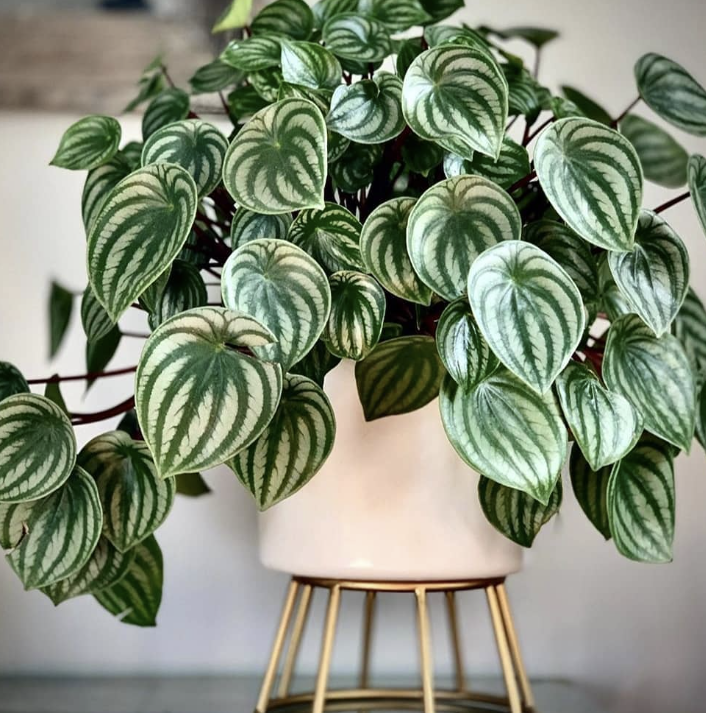
Watermelon Peperomia (Peperomia argyreia) is a compact, tropical houseplant known for its unique appearance. Its leaves mimic the rind of a watermelon with their silver stripes and round shape. It is a popular choice for plant lovers and pet parents alike. If you’re hoping to expand your collection, learning how to propagate this plant is a great way to grow new plants.
In this comprehensive guide, we will walk you through all the different propagation methods for watermelon peperomia plants. Then we will also share tips on how to encourage healthy growth, along with common issues to avoid.
Want to know more on how to care for your Watermelon Peperomia? Read the full care guide here.
Best Time to Propagate
To begin with, the best time to propagate watermelon peperomia is during the growing season. This usually falls between early spring and early summer. New growth tends to appear faster during this period. Warmer temperatures and longer daylight hours support stronger root development.
Propagation by Leaf Cuttings
Leaf cuttings are one of the easiest and most reliable methods for propagating watermelon peperomia.
What You’ll Need:
- A healthy leaf with a visible petiole (leaf stem)
- Clean scissors
- A small pot with drainage holes
- Well-draining mix (peat moss, orchid bark, clay balls)
- Clear plastic bag or humidity dome (optional)
Step-by-Step:
- Choose a mature, healthy leaf from the mother plant.
- Cut the leaf off at the base using clean scissors.
- Trim the leaf in half horizontally. Each half can produce new baby plants.
- Let the cut side dry for a couple of days. This helps prevent rot.
- Prepare a small hole in the potting mix.
- Insert the leaf half slightly into the soil, cut side down.
- Mist the soil lightly to keep it moist.
- Place the pot in a bright spot with indirect light. An east-facing window with sheer curtains works well.
- Cover the pot with a clear plastic bag to maintain high humidity levels.
- Remove the cover once you see baby roots or new leaves forming.
Propagation through leaf cuttings takes time. You may wait several weeks before you see signs of root growth. Be patient, and avoid moving the cutting too much.
Propagation by Stem Cuttings
Stem cuttings are another great way to multiply your watermelon peperomia plants. This method also encourages bushier growth in the mother plant.
What You’ll Need:
- Healthy stem with a leaf node
- Clean scissors
- Room temperature water or moist soil
- Small pot or a glass of water
Water Method:
- Cut a stem section with a healthy leaf and a visible node.
- Place the cut end into a glass of water.
- Make sure the node is underwater, but not the leaf.
- Keep the glass in a bright spot with indirect sunlight.
- Change the water every few days to prevent bacteria.
- After a couple of weeks, roots should appear.
- Once new roots are about 2–3 cm long, move the cutting into a pot with well-draining soil.
Soil Method:
- Cut a stem with a node and a mature leaf.
- Place the cutting directly into moist soil.
- Mist the soil to keep it evenly moist.
- Cover the pot with a clear plastic bag for added humidity.
- Position the pot in a warm location with bright indirect light.
Both water and soil methods work well. Your choice depends on your personal preference and available materials.
Ideal Conditions for Propagation
To encourage baby plants to thrive, it’s important to give them the right care:
- Keep the potting mix lightly moist, but not soggy.
- Use a small pot to avoid too much excess soil.
- Choose a warm location away from direct sunlight.
- High humidity levels support new growth. A pebble tray or humidity dome helps.
- Maintain consistent warmth around 21–25°C (70–77°F).
Avoid placing cuttings in areas with much direct sun. Delicate leaves are prone to burning.
Common Issues During Propagation
Root Rot
Too much water or poor drainage causes the roots to rot. Make sure the pot has proper drainage holes and use a well-draining mix.
Spider Mites
Low humidity levels attract spider mites. Keep the air moist and check the undersides of leaves for fine webs.
Slow Root Growth
Cool temperatures or low light may slow down the propagation process. Move the cutting to a brighter spot or try a humidity dome to speed up results.
Leaf Yellowing
Old or damaged leaves may yellow during the process. Remove them to focus energy on root development and baby plants.
General Tips for Success
- Use clean scissors for every cut.
- Always start with a healthy leaf or stem.
- Give new plants their own pots once roots are established.
- Avoid large pots. Smaller sizes help prevent soggy soil.
- Do not fertilize until the new plants show signs of active growth.
- Monitor moisture often. Let the top inch of soil dry out slightly between waterings.
Frequently Asked Questions
How long does watermelon peperomia propagation take?
It can take 2–3 weeks to see roots. New leaves may appear after 4–6 weeks.
Can I propagate watermelon peperomia in winter?
Propagation works best during the growing season, like early spring or early summer.
Do I need a humidity dome?
You don’t need one, but high humidity helps. A clear plastic bag or pebble tray works well.
Should I fertilize the cuttings?
Wait until the propagated plant has grown several new leaves. Then, you can feed with a water-soluble houseplant fertilizer at half strength.
What type of soil is best?
Use a well-draining soil mix. Peat moss, orchid bark, and clay balls support healthy root growth.
Why are my cuttings rotting?
Excess water or poor air circulation may be the cause. Let the cut end dry before planting and use a pot with drainage holes.
Watermelon peperomia propagation is a great way to add new plants to your home decor. Its compact size and silver-striped leaves make it a great choice for small spaces and indoor plant collections. With the right care, clean cuts, and warm conditions, you’ll soon see new roots and baby plants.
Take your time during the process. Keep the cuttings in a bright spot. Maintain moisture without letting the soil get soggy. With patience and attention, your propagated plant will grow into a healthy addition to your plant family.