
The sensation peace lily is not a small, forgettable houseplant.
It is bold, elegant, and it fills a living space fast. This plant is known for its large leaves, white flowers, and strong presence.
If you want a statement plant that still feels calm and easy, this is it. Sensation peace lily care is ideal for plant parents who love tropical plants but want low stress.
In this guide, you will learn exactly how to care for Spathiphyllum ‘Sensation’. You will know how to avoid common mistakes and grow a healthy peace lily with confidence.
What Is a Sensation Peace Lily?
The sensation peace lily is the largest cultivar of spathiphyllum. Its full name is Spathiphyllum ‘Sensation’. It belongs to the Araceae family.
This plant comes from South America, where it grows in warm, humid forests. Unlike true lilies, peace lilies are not actual lilies. They are a family member of plants like philodendrons.
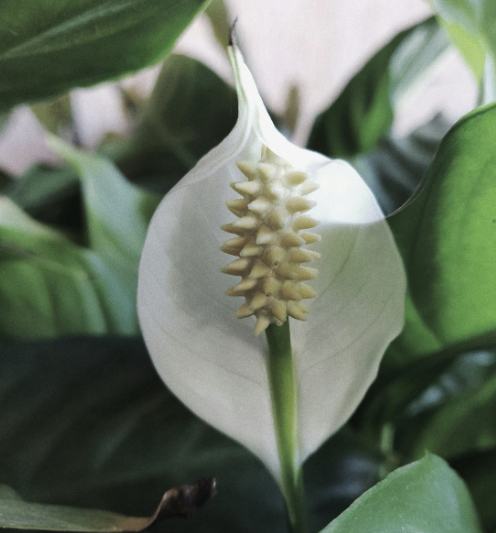
Compared to other peace lily varieties, this one grows taller. It has dark green foliage and oversized leaves. It also produces elegant white flowers that rise above the plant.
Because of its size, it is often called the giant peace lily.
Care
Light Requirements
Light affects both growth and flowers.
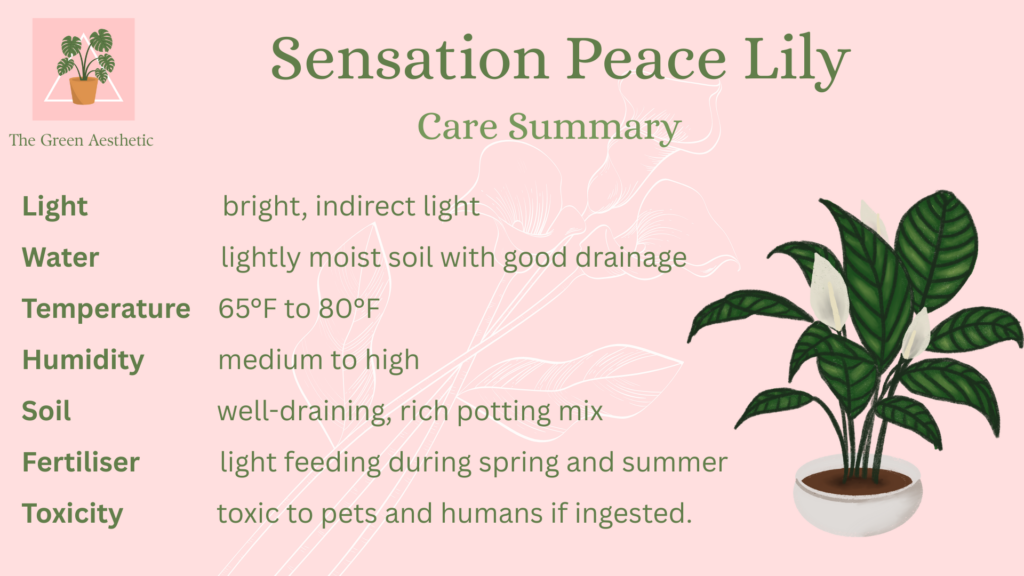
The sensation peace lily prefers bright indirect light. This supports strong leaves and regular blooms. East-facing windows are a great option. A west window also works with filtered light.
Lower light conditions are tolerated. However, growth slows. Flowers become rare. Leaves may turn darker green.
Too much light causes problems. Direct sun leads to yellow leaves or brown spots. Leaf edges may scorch.
If the plant stretches toward the light, it needs more. If leaves fade, it needs less.
Watering Needs
Watering is where many peace lilies struggle.
This plant likes moist soil, not wet soil. Water when the top inch feels dry. Use your finger to double check.
Too much water causes root rot. Leaves turn yellow. The plant feels heavy and soft at the base.
Too little water causes drooping. Leaves look sad and flat. This is a common sight with a thirsty peace lily plant.
Use filtered water or distilled water when possible. Tap water can cause brown tips over time.
Temperature Preferences
The ideal temperature range is 65°F to 80°F.
This plant enjoys warmth. It does not like cold drafts or sudden drops. Avoid placing it near doors or windows in winter.
Too cold causes slow growth and drooping leaves. Too much heat dries the soil fast. Leaves may curl or brown.
Stable temperatures lead to steady growth.
Humidity Levels
High humidity supports large leaves and flowers.
Average homes are often too dry. Aim for higher humidity levels when possible. Bathrooms with indirect sunlight work well.
Low humidity causes brown tips. Leaves may split or curl. Growth slows.
Too much humidity without airflow can cause fungal diseases. Always allow gentle air movement.
Pebble trays help slightly. Grouping plants also raises humidity.
Best Positioning in the Home
Choose a spot with indirect sunlight and steady conditions.
North-facing windows work in bright rooms. East-facing windows are often ideal. Avoid harsh afternoon sun.
This plant works well as a floor plant. It fills empty corners and open living space beautifully.
Keep it away from heaters and air vents.
Fertilizer and Plant Nutrients
Sensation peace lilies are not heavy feeders.
Use a balanced fertilizer during the growing season. Early spring through summer is the best time.
Feed once a month. Use half strength. Too much fertilizer causes leaf burn.
Skip feeding during winter months.
Best Soil and Pot Choice
Use a well-draining soil mix. The best soil holds moisture but drains excess water.
Add perlite or bark to improve airflow. Fresh soil supports new growth.
Always use pots with drainage holes. Decorative pots should hold a nursery pot inside.
Pot size matters. A pot that is too large holds excess water.
Repotting Sensation Peace Lily
Peace lilies are sensitive to repotting.
Only repot when roots fill the pot. Signs include roots at the bottom or slowed growth.
Early spring is the best time. Move up one pot size only.
After repotting, expect slight drooping. This usually resolves within a week.
Pruning and Maintenance
Remove yellow or damaged leaves at the base. Use clean tools.
Cut spent flowers near the soil line. This helps redirect energy.
Wipe leaves with a damp cloth to remove dust. Clean leaves absorb more light.
Propagation Methods
Propagation happens through division.
Split the plant during repotting. Each section should have roots and leaves.
Water well and keep humidity high. New plants establish slowly.
This is the best way to create new plants.
Toxicity Information
Sensation peace lily is toxic to pets and humans if ingested.
Keep it away from cats, dogs, and small children.
Wear gloves if you have sensitive skin.
Common Issues and What They Mean
Brown tips usually mean low humidity or mineral buildup. Switch to filtered water.
Drooping leaves often signal thirst. Water deeply and allow drainage.
Yellow leaves often come from excess water. Check drainage holes and soil moisture.
Few flowers usually mean not enough light.
Pests and Diseases
Common pests include spider mites and mealybugs.
Inspect leaves regularly. Treat early with insecticidal soap.
Fungal diseases come from wet soil and poor airflow. Improve drainage and spacing.
How to Encourage More Flowers
Flowers appear with the right balance of light and care.
Provide bright indirect light. Avoid moving the plant often.
Feed lightly during the growing season. Remove old flowers promptly.
Consistency is the best way to encourage blooms.
FAQs About Sensation Peace Lily Care
Do sensation peace lilies like coffee grounds?
Yes, if they are used sparingly. Coffee grounds can make soil too acidic and compact.
Read my guide The Best Way to Use Coffee Grounds To Fertilise Plants for tips
Are peace lilies sensitive to repotting?
Yes. Repot gently and only when needed.
When should I split my sensation peace lily?
Split during early spring when repotting.
How do you propagate sensation peace lily?
Propagation is done through division, not cuttings.
Why does my sensation peace lily have brown tips?
Low humidity, tap water, or excess fertilizer are common causes.
Why is my sensation peace lily drooping?
Drooping usually means it needs water or stable temperatures.
The sensation peace lily is an elegant plant with a strong presence. With the right care routines, it thrives indoors.
Give it indirect light. Keep soil moist but not wet. Support humidity.
When its needs are met, this plant rewards you with large leaves and graceful white flowers.