
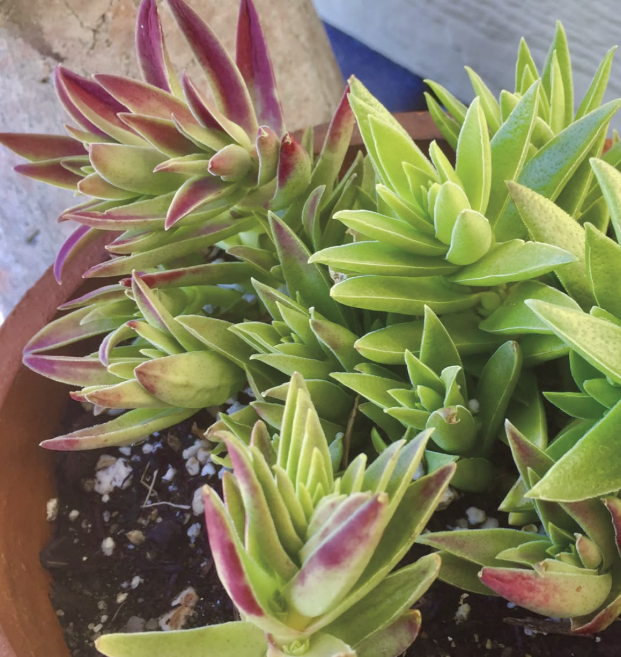
The Shark Tooth Plant, Crassula corymbulosa, is a compact succulent known for its striking leaf structure. Its sharp, triangular leaves grow in a tight spiral, forming a rosette that looks like stacked shark fins. Native to South Africa, it thrives in dry conditions and is a standout in any succulent collection.
Want more help with your plants? Read my other plant care guides here.
☀️ Light
This plant loves bright light and will do best in a sunny windowsill. It needs at least 4–6 hours of bright indirect light daily to maintain its red-edged leaf color. In low-light homes, consider using a grow light to encourage healthy growth and stronger leaf color.
✅ Growers report better color and tighter leaf stacks with more sun exposure.
🌡️ Temperature
Shark Tooth Plants enjoy warm days and mild nights. Ideal temperatures range between 65°F and 80°F. Protect the plant from frost and sudden cold snaps. It’s not frost-tolerant and should be brought indoors during colder months.
💧 Watering
This is a drought-tolerant succulent that prefers little water. Let the soil dry out fully between waterings. In warmer months, water every 10–14 days. During winter, reduce watering to once a month or less.
🚫 Avoid excess water — this is the quickest way to cause root rot or mushy leaves.
💨 Humidity
Crassula corymbulosa likes low humidity. A dry indoor environment is perfect, and no extra moisture is needed. It’s well-suited to homes with average indoor air.
🏡 Ideal Location
Choose a bright indoor spot, such as a south- or east-facing window. A plant shelf, sunroom, or bright kitchen is ideal. Outdoors, place it in a semi-sunny spot and protect it from heavy rain.
Want to add more trailing plants to your collection? Read my blog post on Best Trailing Plants Indoor: Beautiful Vines That Transform Any Space
🍽️ Feeding
Fertilize during the growing season (spring to early fall). Use a balanced succulent fertilizer once a month at half strength. Avoid fertilizing in winter.
🌱 Soil & Potting
Use a well-draining succulent soil mix. Combine:
- 2 parts cactus mix
- 1 part perlite or coarse sand
Plant it in a terracotta pot with drainage holes. These pots help wick away extra moisture and prevent root rot.
✂️ Pruning
Prune only to remove dead leaves or to shape the plant. Always use clean, sharp scissors. You can trim back leggier stems to encourage a compact shape.
🐛 Pests & Problems
Watch for:
- Mealybugs – cottony pests around leaves
- Spider mites – tiny red bugs and webbing
- Fungal issues – usually caused by poor drainage
Use neem oil or insecticidal soap for pest control. Keep the plant dry and airflow good.
🔁 Propagation
Shark Tooth Plants are easy to propagate:
- Leaf cuttings: Let cut ends dry for 2–3 days, then place on soil
- Stem cuttings: Allow to callous before planting
- Offsets: Gently separate from the base and replant
Propagation works best in spring and summer.
🔎 General Care Tips
- Toxic to pets, so keep out of reach
- Rotate the pot weekly for even sun exposure
- Use sheer curtains if sunlight is too strong
- Brush off dust with a soft cloth
❓ FAQ
How do I keep my Shark Tooth Plant from stretching?
Give it more light. Stretching usually means it’s not getting enough.
Why are the leaf tips turning brown?
Could be too much water or poor drainage.
Can I grow this in a dish garden?
Yes, it pairs well with other low-water succulents.
Does it flower?
Yes, it may produce tiny white blooms in late summer.
✅ Ease of Care
Crassula corymbulosa is a low-maintenance plant. With infrequent watering, bright light, and dry air, it thrives without much attention. It’s a good choice for beginners and succulent fans who want something visually unique.
🌵 Other Succulents to Try
If you love Shark Tooth Plants, try these:
- 🪴 Crassula ‘Campfire’ – red-tipped leaves
- 🌵 Crassula perforata (String of Buttons) – stacked leaf columns
- 🍃 Echeveria ‘Lola’ – rosette-forming beauty
- 🧊 Graptoveria – low, compact, and pastel
Love this plant? Read our guide on Butterwort plants next.