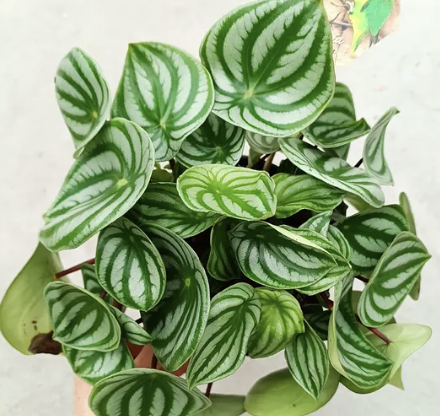
The watermelon peperomia is a small houseplant with big style. Its leaves look like watermelon rinds. That detail alone makes people stop and stare.
If you are new to this plant, you are not alone. Many people love how it looks but worry about care. The good news is this. Watermelon peperomia plant care is simple once you understand the basics.
The watermelon peperomia is also called Peperomia argyreia. It is grown for its leaves, not flowers. Each leaf has silver stripes and deep green veins.
This plant stays compact. That makes it perfect for shelves, desks, and small spaces. It is calm, tidy, and easy to enjoy.
Where Watermelon Peperomia Comes From
Watermelon peperomia comes from South America. It grows on the forest floor under trees. Light reaches it in a soft and filtered way.
Because of this, it prefers indirect light and steady care. It does not like extremes. This background explains most of its needs.
Types of Watermelon Peperomia
The most common type is Peperomia argyreia. There are also related peperomia plants with different leaf shapes.
Some have rippled leaves. Others have solid green leaves. While they look different, care is often similar.
Is Watermelon Peperomia Care Similar to Other Houseplants?
Yes, it is. Watermelon peperomia care is similar to other peperomia plants. It also shares traits with some tropical plants.
It likes indirect light, light watering, and good drainage. If you can care for a pothos or philodendron, you are already close.
However, it is more sensitive to excess water. That detail matters.
Light Needs for Watermelon Peperomia
Light plays a big role in leaf health. Watermelon peperomia prefers bright indirect light.
Too much direct sunlight can scorch the leaves. Too little light can cause slow growth and dull color.
It can handle lower light conditions, but growth may slow. A spot near a window with filtered light works best.
How to Water Watermelon Peperomia
Water carefully. This plant does not like much water.
Always let the top layer of soil dry before watering again. Soggy soil leads to root rot.
Use a pot with a drainage hole. Empty excess water from the saucer. This step prevents most problems.
Temperature Preferences
Watermelon peperomia enjoys warm temperatures. Normal room temperature works well.
Avoid cold drafts and sudden changes. These can cause stress and drooping leaves.
Humidity Requirements
This plant enjoys humid conditions, but it is not demanding. Average home humidity usually works.
If air is very dry, use a pebble tray or humidifier. This helps during winter months.
Fertilizing Watermelon Peperomia
Feed lightly during the growing season. Spring and summer months are best.
Use diluted plant food once a month. Too much fertilizer can harm the roots. Less is always better.
Best Soil for Watermelon Peperomia
Well-draining soil is essential. Use a light potting mix with good airflow.
Avoid heavy soil that holds water. Excess water in the soil causes problems fast.
Repotting Watermelon Peperomia
This is a small houseplant with a shallow root system. It does not need frequent repotting.
Repot only when roots fill the pot. Choose a slightly bigger pot, not a large one. Too much space holds too much moisture.
Pruning and Shaping
Pruning keeps the plant neat. Remove damaged or yellow leaves at the base.
Light pruning can encourage fuller growth. Always use clean scissors.
Propagation: Growing New Plants
Propagation is easy and fun. You can grow new plants from leaf cuttings or stem cuttings.
Cut a healthy leaf with part of the stem. Place it in water or soil. New roots will form over time. For the full detail guide, read my post on How to Propagate Watermelon Peperomia: A Complete Guide.
Seasonal Care Tips
During the growing season, provide regular watering and light feeding. Growth is active during spring and summer months.
During fall and winter, reduce watering. Skip fertilizer. This rest period is normal.
Benefits of Watermelon Peperomia
This plant is low stress and easy to love. It stays small, tidy, and fits well in any living space.
It also adds texture and color without taking over the room.
Common Problems and Troubleshooting
Drooping leaves often mean watering issues. Too much water is the most common cause.
Yellow leaves may point to soggy soil or poor drainage. Curling leaves may mean low humidity or light stress.
Adjust one thing at a time.
Pests to Watch For
Common pests include spider mites and mealybugs. Dry air increases risk.
Inspect leaves often. Treat early with insecticidal soap if needed.
Hydrogen peroxide can help control pests in the soil and reduce bacteria. It should be used only as a very diluted soil treatment. Never spray it on the leaves, as the foliage is thin and can burn easily.
Use it as a one-time fix, not regular care. If pests keep coming back, switch to insecticidal soap or neem oil instead.
Diseases and Root Issues
Root rot is the main disease risk. It comes from excess water and soggy soil.
Always use well-draining soil and pots with drainage holes.
Is Watermelon Peperomia Pet Friendly?
Yes. Watermelon peperomia is not toxic to cats or dogs. This makes it a great choice for pet homes.
Other Types of Peperomia
There are many peperomia plants to explore. Some have thick leaves. Others trail or mound.
Most share similar care needs, making them easy to collect.
FAQ
Do Watermelon Peperomia like sun or shade?
They prefer bright indirect light. Avoid direct sun.
Is Watermelon Peperomia an air purifier?
It may help slightly, but its main benefit is beauty.
How do you make Watermelon Peperomia bushy?
Provide good light and prune lightly to encourage new growth.
Should I bottom water my peperomia plant?
Yes, bottom watering works well and helps avoid excess water.
Why is my watermelon peperomia drooping?
Drooping usually means watering issues or sudden temperature changes.
Is watermelon peperomia toxic to cats?
No. It is considered pet friendly.
Can you propagate peperomia from a single leaf?
Yes. Leaf cuttings can grow new roots and plants.
Watermelon peperomia plant care is gentle and simple. It rewards steady care, not attention overload.
Give it indirect light. Water lightly. Keep conditions calm.
Do that, and this plant will stay healthy and beautiful for years