
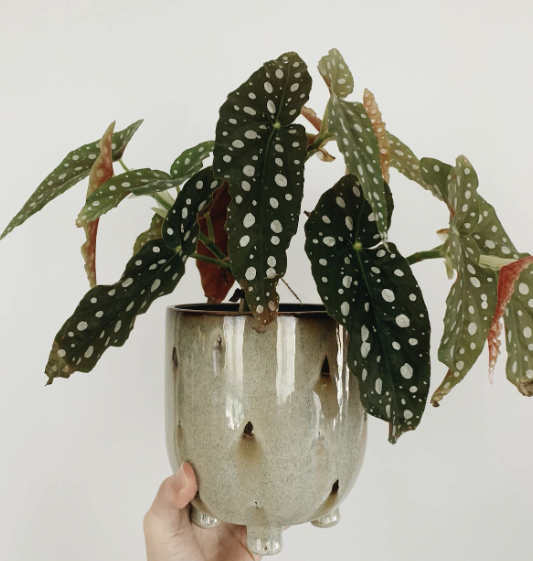
With its olive green leaves, bright silver spots and rich red undersides, the polka dot begonia (Begonia maculata) is a show stopper.
It’s one of those houseplants that really earns its keep. Its dramatic, sculptural and stylish, without being overly demanding.
But to keep it looking its best all year round, you’ll need to give it the right conditions and just a little bit of regular care.
In this post, I’ll walk you through exactly how to care for a polka dot begonia at home. This post covers it all, from light and watering to feeding, pruning and spotting common problems before they become a big deal.
Quick Facts about the Polka Dot Begonia
- Botanical name: Begonia maculata
- Common name: Polka dot begonia
- Height: Up to 90cm
- Spread: Up to 45cm
- Light: Bright, indirect sunlight
- Temperature: 18–21°C year-round, never below 13°C
- Fertiliser: High nitrogen, spring to late autumn
- Watering: Keep compost lightly moist, water from below
- Repotting: Only in spring, and only if it’s rootbound
- Pests: Aphids, red spider mites, whitefly, thrips
- Diseases: Prone to botrytis and powdery mildew
- Position: Bright room, away from strong sun or draughts
What The Polka Dot Begonia Looks Like
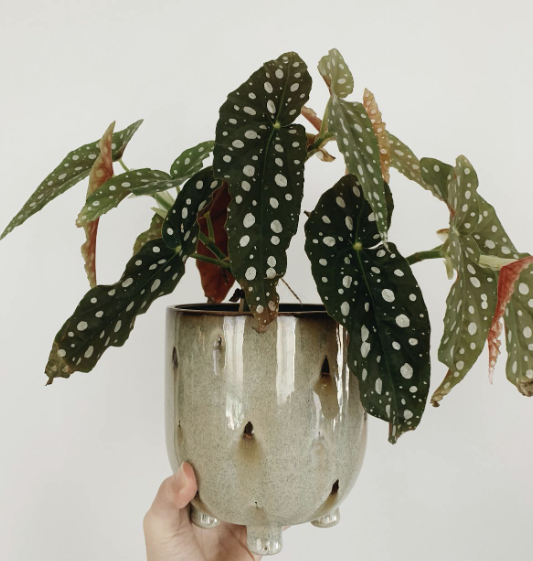
This is a plant that knows how to make a statement. The begonia maculata has elongated, wing-shaped leaves with bold silver spots and deep red undersides that glow when backlit.
It can grow up to 90cm tall, with a spread of around 45cm if given enough space and the right care.
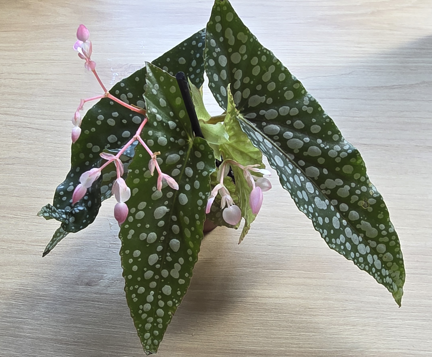
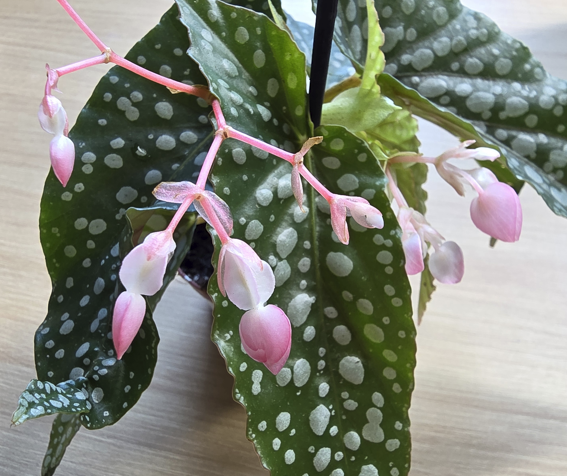
In the right conditions, it may also produce small clusters of pale pink or white flowers, but it’s really the foliage that steals the show.
Light and Positioning for Polka Dot Begonia
This plant thrives in bright, indirect sunlight. A spot near an east or north facing window is ideal. Avoid direct sun as its delicate leaves burn easily, especially during summer or bright winter mornings. If you notice pale or scorched patches, it’s probably had too much sun.
One tip that really helps with symmetrical growth is to turn the pot regularly. These plants will lean toward the light, and rotating it every week or two encourages even, upright stems.
Temperature and Humidity for Polka Dot Begonia
The polka dot begonia prefers a stable environment. Ideal temperatures sit between 18 and 21°C, and it should never be exposed to more than 21°C, even in summer. It also won’t tolerate cold, anything below 13°C can cause damage.
Because it dislikes stuffy or damp air, good ventilation is key. This helps prevent fungal issues and keeps the plant healthy. Avoid placing it near radiators, heaters or draughty doors.
Watering and Feeding for Polka Dot Begonia
The compost should be kept lightly moist, but not soggy. Let the top few centimetres of soil dry out between waterings. In winter, reduce watering, but don’t let it completely dry out for too long.
Water from below. This means placing the pot in a shallow tray of water and letting the soil absorb moisture through the drainage holes. This encourages deeper root growth and prevents water from sitting on the leaves, which can lead to botrytis or mildew. Let the pot sit for 15–20 minutes, then lift it out and allow excess water to drain.
From spring through late autumn, feed every two weeks with a high-nitrogen liquid fertiliser. This supports leaf growth and helps maintain that striking foliage.
Soil Type
Polka dot begonia needs light, well-drained soil to stay healthy. This tropical plant does not like soggy soil or excess water around its roots. Use a light soil mix made from equal parts peat moss or coco coir and perlite, plus a small amount of compost for nutrients.
The mix should hold some moisture but still allow good drainage and air flow.
Always plant in a pot with drainage holes to prevent root rot. Keep the soil slightly moist during the growing season, but let the top few centimetres dry before you water begonia again.
Pruning and Repotting for Polka Dot Begonia
If stems become leggy, cut them back to encourage bushier growth. Always use clean, sharp scissors and cut just above a leaf node. You can propagate the cuttings in water or moist compost if you’d like more plants.
Repot only in spring, and only if your plant is rootbound. If its rootbound, you’ll see roots growing out of the drainage holes, or the plant drying out very quickly after watering. Choose a slightly larger pot and use a light, well-draining potting mix. Avoid repotting unnecessarily; too much space can lead to root rot.
Propagation
Stem Cuttings
Polka dot begonia is easy to propagate and grows best from stem cuttings.
Choose a healthy stem with at least one leaf and a visible node, then make a clean cut just below the node.
Remove the lower leaves and place the cutting in water or moist soil.
Keep it in bright, indirect light while roots develop, which usually takes two to four weeks.
Leaf Cuttings
You can also propagate polka dot begonia from leaf cuttings, although this method is slower.
Place a healthy leaf with a small section of stem into moist soil and keep humidity high.
Warm temperatures and even moisture help new growth appear.
Propagation works best during spring and summer when the plant is actively growing.
Seasonal Care
During the growing season, this tropical plant grows quickly and produces new leaves. This usually happens in early spring through late summer.
Water more often during this time, but keep the soil lightly moist, not soggy. Make sure there is good drainage to avoid root rot.
In the winter months, growth slows down. So, reduce watering and stop feeding. Keep the plant in a warm spot with bright indirect light.
Also, avoid cold drafts. This plant prefers a stable, warm indoor space.
Size and Growth Rate
Begonia maculata is a tall begonia with bamboo-like stems and spotted leaves.
Indoors, it can reach around 2–4 ft (60–120 cm) tall. It can spread about 1–2 ft (30–60 cm) wide.
It is a fast grower in the right conditions. During the growing season, you may see lots of new growth and a new leaf every few weeks.
With proper care, it quickly becomes a bold focal point.
How to Encourage Blooming
Begonia maculata can produce small clusters of flowers, often in late spring or early summer.
To encourage blooming, give the plant plenty of bright indirect light. Enough sunlight is key for flower growth.
Feed with a balanced fertiliser during the growing season. This supports the plant’s nutrients and helps with blooming.
Also, keep humidity levels steady. A little extra humidity can help flower production.
Finally, avoid stress. Healthy plants in good condition are more likely to bloom.
Common Problems
Yellow leaves usually mean the plant is being overwatered or sitting in soggy soil.
Brown or crispy leaf edges are often caused by low humidity or dry indoor air.
Drooping leaves can happen when the plant is too cold or not getting enough light.
Root rot develops if the soil stays wet for too long or drainage is poor.
Leaf drop may occur when the plant experiences sudden temperature changes or drafts.
Pests
Common pests include spider mites, aphids, and mealybugs.
These pests often appear in dry indoor air or on stressed plants. Signs include tiny webs, sticky residue, or white cotton-like spots. Regularly check the leaves, especially underneath, and treat infestations early with insecticidal soap or neem oil.
Pet Safe?
Polka dot begonia is not pet safe.
It is toxic to cats and dogs if eaten and can cause mouth irritation, drooling, and stomach upset. Keep this plant out of reach of pets, or choose a pet-safe plant if animals tend to chew on leaves.
FAQ & Troubleshooting
Why are the leaves turning yellow?
Yellowing can be a sign of overwatering, underwatering, or not enough light. Check the moisture level of the compost, ensure it’s not soggy, and adjust your watering routine. If your plant is in a dim room, try moving it closer to a brighter spot with indirect light.
Why is there grey fluff on my plant?
This is likely botrytis, a common fungal issue that thrives in damp, overcrowded or poorly ventilated conditions. It can also occur if water is splashed onto leaves.
What to do
- Remove any affected areas with clean scissors
- Isolate the plant to prevent spread
- Improve air circulation around the plant
- Use a suitable fungicide if necessary
What’s the white powder on the leaves?
This is usually powdery mildew, caused by dry conditions or poor air flow.
To fix:
- Remove affected leaves
- Increase ventilation
- Mist lightly to increase humidity (without wetting the leaves directly)
- Apply a mildew treatment or fungicide
Why is my begonia dropping leaves?
Leaf drop can be a sign of overwatering or exposure to high temperatures. If it’s also becoming leggy, the issue might be not enough light.
Solution:
- Move to a brighter area (still out of direct sun)
- Allow the soil to dry slightly more between waterings
- Check the temperature isn’t climbing above 21°C
The polka dot begonia isn’t quite as carefree as some houseplants, but it rewards you for your attention. With its striking spotted leaves, upright stems and eye catching colour, it makes a gorgeous statement in any indoor space.
As long as you stick to its key needs this plant can thrive beautifully, even in a smaller home or apartment. Don’t forget to turn the pot regularly, snip back leggy stems, and give it a little extra feed during the growing season.
It might not be the plant for those who want zero maintenance, but if you’re willing to give it a little care, Begonia maculata will more than return the favour.
Want more plant care guides? Check out all my plant care guides here.