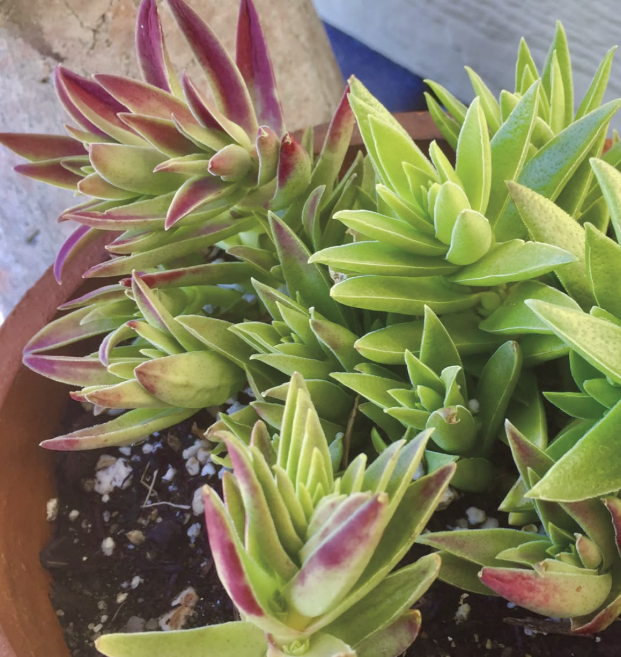
If you want a bold plant without a lot of fuss, Shark Tooth Plant is a great choice. Its thick leaves have pointed edges that look like tiny teeth. This gives it a fun and unusual appearance.
Shark Tooth Plant is also fairly easy to care for. It stores water in its leaves, so it can handle dry periods. However, too much water can cause problems quickly.
Once you understand its light, water, and soil needs, care becomes simple. In this guide, I’ll cover everything you need to know about growing a healthy Shark Tooth Plant.
Want more help with your plants? Read my other plant care guides here.
What Is a Shark Tooth Plant?
Shark Tooth Plant is commonly known as Crassula corymbulosa. It is a succulent with thick, pointed leaves.
The leaves grow in a stacked pattern along the stems. This gives the plant its shark tooth appearance.
You may also see this plant described simply as a Crassula succulent. Common names can sometimes vary between plant sellers.
The important thing is to look at the plant itself. Its thick leaves and pointed shape make it easy to recognise.
Background and Natural Environment
Shark Tooth Plant comes from South Africa, where many succulents grow in warm and dry conditions.
These plants often experience periods with very little rainfall. As a result, they have developed ways to store water.
Shark Tooth Plant stores moisture inside its thick leaves. This helps it cope with dry conditions and missed watering.
This background gives us a useful clue about its care. The plant does not want constantly wet soil.
Instead, it prefers plenty of light, fast-draining soil, and time to dry between watering.
Shark Tooth Plant Care for Beginners
Shark Tooth Plant is a good option for beginners.
It does not need a complicated care routine. In fact, giving it too much attention can sometimes cause more harm.
The main thing to remember is simple. Let the soil dry before watering again.
It also needs plenty of light to stay compact and healthy.
If you already grow jade plants or other Crassula plants, the care should feel familiar.
For a beginner, the biggest mistake to avoid is overwatering.
Types of Shark Tooth Plant
There can be some confusion around Shark Tooth Plant names.
You may see different Crassula plants sold under similar common names. Some have slightly different leaf shapes or colours.
The plant commonly referred to as Shark Tooth Plant has thick, pointed leaves arranged along the stems.
You may also see unusual forms in specialist plant collections.
If you are buying a Shark Tooth Plant, check the botanical name where possible. This can help you avoid confusing it with a different Crassula.
How Big Does Shark Tooth Plant Get?
Shark Tooth Plant stays fairly compact.
It can reach around 15 to 30 centimetres tall when grown indoors. It may also spread as new stems develop.
Its compact size makes it useful for shelves, desks, windowsills, and small rooms.
With enough light, the plant can stay fairly neat and full.
If it becomes stretched, pruning can help bring back a more compact shape.
Can Shark Tooth Plant Grow Indoors or Outdoors?
Shark Tooth Plant can grow indoors or outdoors in the right climate.
In cooler climates, it is usually easier to grow indoors.
Place it near a bright window where it receives plenty of light. An east-facing or south-facing window can work well.
You can also move the plant outside during warmer months.
If you do this, introduce it to stronger light slowly. A sudden change can cause leaf damage.
Bring it indoors before cold weather arrives.
Shark Tooth Plant is not a good choice for places with cold winters or frost.
Is Shark Tooth Plant Care Similar to Other Plants?
Yes. The care is very similar to other succulent plants.
It has many of the same needs as jade plants and other Crassula varieties.
These plants prefer bright light, well-draining soil, and careful watering.
They also prefer lower humidity than tropical houseplants.
If you are already comfortable caring for succulents, Shark Tooth Plant should feel quite easy.
You can also read my guide to common succulent problems if you want help spotting early signs of stress.
Light Requirements
Light is one of the most important parts of Shark Tooth Plant care.
Give your plant a bright spot with plenty of indirect light.
An east-facing window can provide gentle morning sunlight. A south-facing window can also work well.
The plant can handle some direct sunlight. However, too much strong afternoon sun may cause stress.
Start with bright indirect light if you are unsure.
If the plant does not receive enough light, its growth may become stretched.
The leaves may also become less compact.
A grow light can help during darker winter months.
How Much Sun Does Shark Tooth Plant Need?
Shark Tooth Plant needs plenty of light each day.
Several hours of bright light is a good aim.
Some gentle direct sunlight can be useful. However, avoid suddenly placing a low-light plant into strong sun.
Move it gradually into a brighter spot.
This helps the plant adjust without burning the leaves.
How to Water Shark Tooth Plant
Watering is one of the most important parts of successful Shark Tooth Plant care.
The plant does not need much water.
Instead, allow the soil to dry fully before watering again.
When it is time to water, give the plant a thorough drink.
Let the water flow through the pot’s drainage holes.
Then allow all excess water to escape.
Do not leave the pot sitting in water.
This simple routine helps protect the roots from root rot.
How Often Should You Water Shark Tooth Plant?
There is no perfect watering schedule.
Your plant may need water every few weeks during active growth. However, this depends on light, temperature, pot size, and soil.
Always check the soil before watering.
During summer, the soil may dry faster.
During winter, it may stay dry for much longer.
The best way to water is by checking the plant rather than following a fixed calendar.
Temperature
Shark Tooth Plant prefers warm temperatures.
Normal indoor room temperatures are usually suitable.
Keep the plant away from cold drafts and sudden temperature changes.
This becomes especially important during winter.
Do not leave the plant next to an open window during a cold night.
You should also avoid placing it directly beside a hot radiator.
Very hot or very cold conditions can cause stress.
Stable conditions are usually best.
Humidity
Shark Tooth Plant does not need high humidity.
Average household humidity is usually suitable.
You do not need to mist the leaves.
You also do not need to use a pebble tray.
In fact, very humid conditions can create problems if the soil is also staying wet.
Keep the plant somewhere with good airflow and let the soil dry properly.
Fertiliser
Shark Tooth Plant does not need much fertiliser.
During the growing season, you can feed it lightly.
Use a diluted succulent fertiliser about once a month.
A half-strength feed is usually enough.
This can support steady new growth without overwhelming the plant.
Avoid heavy fertilising.
Too much fertiliser can damage the roots and create salt build-up in the soil.
Stop feeding during winter when growth slows.
Best Soil for Shark Tooth Plant
Good soil is very important for this succulent.
Use a fast-draining succulent soil mix.
The mix should allow water to escape quickly. It should not remain wet around the roots for days.
You can add perlite or coarse sand to improve drainage.
Avoid heavy soil that holds too much moisture.
The goal is simple. Give the roots air and allow excess water to escape.
If you are still learning about plant soil, my Beginner’s Guide to Understanding Soil can help you understand why different plants need different mixes.
Growing Shark Tooth Plant in Pots
Choose a pot with drainage holes.
This gives excess water a way to escape.
Terracotta can be a useful choice for succulents. It allows moisture to evaporate through the sides of the pot.
However, a plastic pot can also work well.
The most important feature is good drainage.
Do not choose a huge pot for a small plant.
Too much soil can stay wet for too long.
A pot that is only slightly larger than the root system is usually a better choice.
Repotting Shark Tooth Plant
Shark Tooth Plant does not need frequent repotting.
Wait until the plant has outgrown its pot.
You can also repot when the soil has become compacted or breaks down.
When repotting, move the plant into a slightly larger pot.
Avoid jumping into a much larger container.
Gently remove the plant and check the root system.
Healthy roots should not feel mushy.
Place the plant into fresh succulent soil.
Then water carefully and allow excess water to drain.
Spring can be a good time to repot because the plant is entering active growth.
Pruning Shark Tooth Plant
Pruning is simple and does not need to happen often.
You can remove dry, damaged, or dead leaves to keep the plant tidy.
If the plant becomes too tall or stretched, you can trim some stems.
Use clean scissors to make a neat cut.
Pruning can also encourage a fuller shape.
Better still, healthy cuttings can be used for propagation.
So, your pruning waste can become a new plant.
How to Propagate Shark Tooth Plant
Shark Tooth Plant is relatively easy to propagate.
You can use stem cuttings, leaf cuttings, or offsets.
Stem cuttings are usually the easiest method for beginners.
Choose a healthy stem and cut it with clean scissors.
Allow the cut end to dry for a few days.
This gives the wound time to form a callus.
Then place the cutting onto well-draining succulent soil.
Do not bury it deeply.
Keep it somewhere bright and warm.
Water very lightly while roots begin to develop.
How to Propagate Shark Tooth Plant From Leaves
Leaf propagation is also possible.
Choose a healthy leaf and remove it carefully from the plant.
Try to remove the whole leaf rather than breaking it.
Allow the cut end to dry.
Then place the leaf on top of dry succulent soil.
Do not bury the whole leaf.
With time, roots may appear from the base.
A tiny new plant can eventually develop.
This method takes patience, so do not give up too quickly.
Can You Split Shark Tooth Plant?
Some mature plants can produce separate growth points.
These may sometimes be separated during repotting.
However, division is not usually the easiest method.
Stem and leaf propagation are more practical for most home growers.
If you find a naturally separate section with roots, it can be potted on its own.
Seasonal Shark Tooth Plant Care
Your Shark Tooth Plant has slightly different needs throughout the year.
Understanding these changes can help prevent watering problems.
Spring
Spring is when your plant begins becoming more active.
New growth may appear as light levels increase.
Start watering more regularly as the soil dries.
You can also start feeding again with a diluted fertiliser.
Spring is a good time to repot and propagate.
Summer
Summer is usually the main growing season.
Give your plant plenty of bright light.
Check the soil regularly, but still allow it to dry before watering.
Warm weather can make the soil dry faster.
However, do not water simply because it is summer.
Check the soil first.
You can also feed lightly during this period.
Autumn
Growth may begin to slow during early fall.
As the days become shorter, the plant may use less water.
Reduce watering as needed.
You should also reduce feeding as the growing season ends.
Keep the plant in a bright location.
Winter
Winter is usually a quieter period.
Your Shark Tooth Plant may grow very slowly or stop growing.
This means it needs less water.
Let the soil stay dry for longer between waterings.
Stop fertilising while the plant is resting.
Keep it somewhere bright and protect it from cold temperatures.
A grow light can help if your home has very low winter light.
Does Shark Tooth Plant Flower?
Yes, Shark Tooth Plant can flower.
However, flowering is not always common indoors.
Small flowers may appear when the plant is mature and growing well.
Good light can help encourage flowering.
A suitable feeding routine may also support healthy growth.
Still, do not worry if your plant never flowers.
Most people grow Shark Tooth Plant for its unusual leaves.
The distinctive leaf shape is the main attraction.
Shark Tooth Plant Benefits
Shark Tooth Plant is a great choice for anyone who wants an unusual succulent.
Its thick, pointed leaves add texture without taking up much space.
The plant is also fairly low maintenance.
This makes it a good option for busy plant lovers.
Its compact size works well on shelves, windowsills, desks, and plant stands.
It can also add variety to a succulent collection.
Instead of choosing another standard rosette, you can add something with a completely different shape.
Common Shark Tooth Plant Problems
Most Shark Tooth Plant problems are linked to watering or light.
Before changing your care routine, look at the whole plant.
Check the soil, roots, light, and temperature.
This can help you find the real cause instead of treating the symptom.
Why Is My Shark Tooth Plant Turning Yellow?
Yellow leaves often mean the plant has received too much water.
Check the soil.
If it stays wet for a long time, the roots may be struggling.
Poor drainage can make this worse.
An older leaf may also naturally turn yellow before dropping.
If several leaves turn yellow at once, check the roots and soil.
Why Is My Shark Tooth Plant Turning Brown?
Brown leaves can have several causes.
Strong direct sunlight can cause damage.
Watering problems can also lead to brown areas.
Dry conditions may cause crispy leaf edges.
Sudden changes in temperature can also stress the plant.
If you are unsure about the cause, my guide to why succulents turn brown covers the most common reasons.
Why Is My Shark Tooth Plant Dropping Leaves?
Leaf drop can happen when the plant is stressed.
Overwatering is one possible cause.
Cold temperatures and sudden changes can also affect the leaves.
Low light may contribute to weak growth.
Check the soil before watering again.
If the roots are healthy and the plant is growing, one older leaf dropping is usually less concerning.
Why Is My Shark Tooth Plant Stretching?
Stretching usually means the plant needs more light.
Succulents need plenty of brightness to stay compact.
Move your plant closer to a bright window.
You can also use a grow light during darker months.
Pruning the stretched growth can help restore a fuller shape.
Pests
Pests are not usually a major problem with Shark Tooth Plant.
However, spider mites and mealybugs can sometimes appear.
Check the leaves and stems regularly.
Look underneath the leaves too.
Spider mites can cause small pale marks.
Mealybugs often look like tiny white cottony patches.
If you find pests, separate the plant from your other houseplants.
You can wipe the plant carefully and use a suitable insecticidal treatment.
Neem oil or insecticidal soap can also be used when appropriate.
Always follow the instructions on the product.
If you notice unusual marks, pests, or signs of damage, my guide to common succulent pests and diseases can help you identify the problem and find the right treatment.
Diseases
Root rot is the main disease problem to watch for.
It usually develops when the roots stay wet for too long.
Poor drainage and frequent watering are common causes.
Signs can include yellow leaves, soft stems, dark roots, and a bad smell.
If you suspect root rot, remove the plant from its pot.
Check the roots carefully.
Cut away badly damaged areas with clean scissors.
Then repot the plant into fresh, well-draining succulent soil.
Allow the soil to dry properly between watering.
Is Shark Tooth Plant Pet Friendly?
Shark Tooth Plant is not considered pet safe.
For this reason, keep it away from cats, dogs, and small children.
A high shelf or secure plant stand can help.
You should also make sure the plant cannot fall within reach of curious pets.
If you have several plants at home, check the safety of each species separately.
Should You Get a Shark Tooth Plant?
Shark Tooth Plant is a great choice if you want something unusual.
It has a bold shape but does not need complicated care.
It is also compact enough for smaller spaces.
The biggest thing to remember is not to overwater it.
Give it plenty of bright light and fast-draining soil.
Then let the soil dry before watering again.
If you already enjoy succulent plants, this one should fit into your collection easily.
It is also a good choice if you want to add more texture to your plant display.
Frequently Asked Questions
How do you care for a Shark Tooth Plant?
Give it bright indirect light and well-draining succulent soil.
Allow the soil to dry fully before watering.
Then water deeply and let the excess water drain away.
Keep it warm and avoid high humidity.
Feed lightly during the growing season.
Reduce watering and stop feeding during winter.
Is Shark Tooth Plant easy to care for?
Yes. Shark Tooth Plant is generally easy to care for.
It needs plenty of light and does not need frequent watering.
The most common mistake is giving it too much water.
Once you understand that, it becomes a fairly low-maintenance plant.
How much water does Shark Tooth Plant need?
Shark Tooth Plant needs much less water than most tropical houseplants.
Let the soil dry fully before watering.
Then give it a thorough drink.
Allow all excess water to escape through the drainage holes.
The exact timing depends on your home and the season.
How often should I water Shark Tooth Plant?
There is no fixed schedule that works for every plant.
During active growth, it may need water every few weeks.
During winter, it may need much less.
Always check the soil first.
Water only when it has dried fully.
Does Shark Tooth Plant need direct sunlight?
It can handle some direct sunlight.
However, bright indirect light is a safer choice indoors.
Strong hot afternoon sunlight can cause leaf damage.
Give it gentle morning sun where possible.
Increase direct light gradually if the plant has been growing in lower light.
Can Shark Tooth Plant grow outdoors?
Yes, it can grow outdoors in warm conditions.
Protect it from heavy rain and extreme weather.
It should also be brought inside before cold winters in cooler climates.
A sheltered position with bright light works best.
Does Shark Tooth Plant need humidity?
No.
Normal indoor humidity is usually enough.
Avoid misting and extra moisture around the plant.
Dryer air is much closer to the conditions this succulent prefers.
What soil is best for Shark Tooth Plant?
Use a fast-draining succulent or cactus mix.
You can add perlite or coarse sand if your mix needs more drainage.
The soil should dry quickly after watering.
Avoid heavy soil that stays wet.
Do Shark Tooth Plants like small or large pots?
They usually prefer a smaller pot.
Choose a container that is only slightly larger than the root system.
A large pot can hold too much wet soil.
Make sure it always has drainage holes.
How do you propagate Shark Tooth Plant?
The easiest method is usually stem propagation.
Take a healthy stem cutting and allow the cut end to dry.
Then place it into well-draining succulent soil.
Leaf propagation is another option.
Some mature plants can also be divided if they have separate rooted sections.
Can you grow Shark Tooth Plant from a leaf?
Yes, leaf propagation can work.
Choose a healthy leaf and remove it carefully.
Let the wound dry before placing the leaf on succulent soil.
Keep it bright and dry while new roots begin to develop.
Be patient because this method takes time.
Why is my Shark Tooth Plant turning yellow?
Overwatering is one of the most common causes.
Check whether the soil is staying wet.
If it is, improve drainage and allow the soil to dry.
One older yellow leaf can also be normal.
Several yellow leaves at once suggest a care problem.
Why is my Shark Tooth Plant turning brown?
Too much direct sunlight can cause brown areas.
Watering problems can also lead to brown leaves.
Check the soil and light before making changes.
Move the plant to bright indirect light if the sunlight is too strong.
Why is my Shark Tooth Plant dropping leaves?
Leaf drop can happen after stress.
Overwatering, low light, cold temperatures, and sudden changes can all play a role.
Check the soil first.
Then look at the plant’s location and recent care routine.
How do I make my Shark Tooth Plant bushier?
Give it plenty of light.
Then prune long or stretched stems.
Make clean cuts above healthy growth points.
This can encourage new growth and help create a fuller shape.
You can also root the cuttings and plant them back into the same pot.
Does Shark Tooth Plant flower?
Yes, it can produce small flowers.
However, flowering may be less common indoors.
Give the plant plenty of light and good care.
A healthy plant is more likely to flower.
Is Shark Tooth Plant toxic to pets?
This plant should not be treated as pet friendly.
Keep it away from cats and dogs.
A secure high shelf can help keep it out of reach.
What is the difference between Shark Tooth Plant and Shark Tooth Fern?
These names can be confusing.
Shark Tooth Plant is commonly used for a succulent.
A Shark Tooth Fern is a different type of plant.
They do not have the same care needs.
If you are searching for Shark Tooth Plant care, check the botanical name before buying.
What are USDA hardiness zones?
USDA hardiness zones help gardeners understand which outdoor temperatures plants can tolerate.
They are mainly useful for outdoor gardening.
For an indoor Shark Tooth Plant, your home’s temperature matters more.
If you plan to grow it outside, check your local climate before leaving it outdoors.
Final Tips
Shark Tooth Plant is a bold succulent with a surprisingly simple care routine.
Give it bright light, well-draining soil, and careful watering.
Most importantly, let the soil dry between waterings.
This helps protect the root system from root rot.
During spring and summer, support active growth with light feeding.
Then reduce watering and stop fertilising during winter.
With the right conditions, your plant can stay compact, healthy, and full of character.
Its unusual leaves make it a lovely addition to a succulent collection.
So, if you want a plant that looks different without demanding too much attention, Shark Tooth Plant is an excellent choice.