
Monstera plants are bold, tropical house plants with large split leaves. These plants grow fast in the right conditions and can become very large indoor beauties.
To grow a healthy Monstera, you need the best soil. The right soil supports strong roots, steady new growth, and glossy green leaves. The wrong soil can cause root rot and slow growth.
This guide explains exactly what soil this plant needs and how to repot it properly.
If you are new to plants and struggling with soil, read my post The Beginners Guide To Understanding Soil.
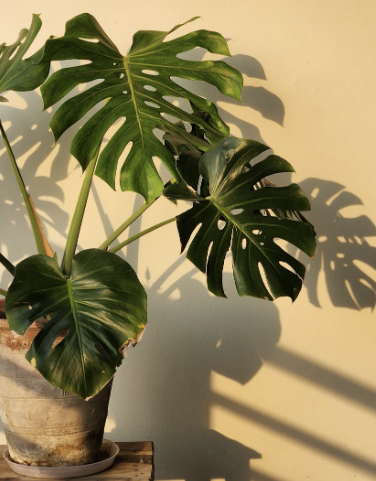
What Soil to Use for Monstera
The best soil for Monstera is rich but well-draining. It should hold moisture without staying soggy. These plants like soil that is airy and loose.
A good Monstera soil mix includes:
- 2 parts high-quality indoor potting soil
- 1 part perlite or pumice
- 1 part orchid bark
This mix drains well and allows air to reach the roots. The bark keeps the soil chunky, while perlite improves drainage. The potting soil provides nutrients.
Monstera roots like space to breathe. Dense, heavy soil can lead to root rot.
What Soil Not to Use (And Why)
Do not use heavy garden soil. It compacts and holds too much water. Avoid soil without drainage materials like bark or perlite.
Multi-purpose compost on its own is often too dense. It can stay wet for too long, which may damage the roots.
Soggy soil is one of the biggest causes of problems in Monstera plants.
Soil pH for Monstera
Monstera soil pH should be slightly acidic to neutral. A range between 5.5 and 7 works well.
Most indoor potting soil mixes already fall within this range. Good drainage is more important than exact pH numbers.
Components of Good Monstera Soil
A good mix has three main parts:
Potting soil holds nutrients and moisture.
Perlite or pumice improves airflow and drainage.
Orchid bark creates structure and prevents compaction.
This balance helps prevent root rot while supporting healthy growth.
Planting Monstera in Pots
Always plant Monstera in a pot with drainage holes. Proper drainage protects the roots from excess water.
Plastic pots hold moisture longer. Terracotta pots dry out faster and allow more airflow. Both can work if watering is adjusted.
Choose a pot only slightly larger than the root ball. A pot that is too large can hold too much moisture.
Do Monsteras Like Small or Large Pots?
Monsteras prefer pots that fit their root system closely. They do not like very small pots that restrict roots. They also do not like oversized pots that stay wet for too long.
When repotting, move up just one pot size at a time.
Best Time to Repot Monstera
The best time to repot is in spring or early summer. This is during the growing season. The plant can recover faster and produce new growth.
Avoid repotting during winter unless the plant is rootbound.
How to Repot Monstera
Gently remove the plant from its pot. Loosen the roots carefully. You can remove some old soil, but do not damage healthy roots.
Place the plant in fresh soil mix in a slightly larger pot. Keep the root ball level with the soil surface. Water lightly after repotting.
How Often to Repot Monstera
Young plants may need repotting every year. Mature plants usually need repotting every two to three years.
If roots grow out of drainage holes or circle the pot, it is time to repot.
Does Monstera Go Into Shock After Repotting?
It can. Some leaves may droop for a short time. This is normal and usually temporary.
Keep the plant in bright indirect light and avoid overwatering. The plant should recover within a few weeks.
For the full care guide, read my post Monstera Care Guide: How To Grow a Healthy and Beautiful Plant.
Should You Remove Old Soil When Repotting?
You can gently shake off loose old soil. It is not necessary to remove all of it. Removing too much soil can stress the roots.
The goal is to refresh the soil without harming the plant.
Signs the Soil Is Not Right
Yellow leaves often mean overwatering. Soft stems may signal root rot. Slow growth can mean compacted soil or poor drainage.
Healthy Monstera plants have firm stems and large glossy leaves.
Frequently Asked Questions
What’s the best soil for Monstera?
The best soil for Monstera is a chunky, well-draining mix. Use indoor potting soil mixed with perlite and orchid bark. This keeps the soil airy and prevents root rot.
Do monsteras like small or large pots?
Monsteras prefer pots that are slightly snug. They do not like very tight pots or oversized pots. Move up one size when repotting.
What soil should I repot my Monstera into?
Repot your Monstera into a well-draining mix made from potting soil, perlite, and orchid bark. Avoid heavy compost-only mixes.
What is Monstera soil pH?
Monstera prefers slightly acidic to neutral soil. A pH between 5.5 and 7 is ideal.
Can you use multi-purpose compost for Monstera?
You can use it as part of a mix, but not on its own. Multi-purpose compost can hold too much moisture. Always add perlite and bark for drainage.
Do Monsteras go into shock after repotting?
Yes, they sometimes droop after repotting. This is normal. With proper light and watering, they usually recover quickly.
Should I remove old soil when repotting Monstera?
Remove loose soil gently, but do not strip all of it away. Too much root disturbance can stress the plant.
How often do Monsteras need repotting?
Young plants may need repotting every year. Older plants usually need it every two to three years.