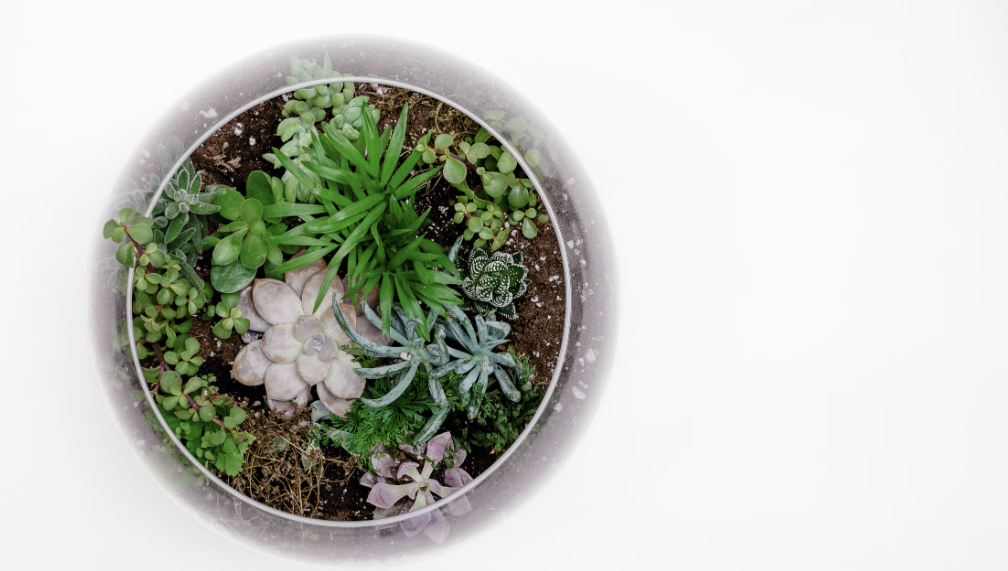
A succulent terrarium is an easy way to bring nature indoors. It combines small succulent plants with a glass container to create a beautiful miniature garden.
Because succulents store water in their leaves, they are low maintenance and perfect for beginners. However, they still need the right soil, light, and container to thrive.
In this guide, you’ll learn how to choose the best succulents, build your own terrarium, and care for it so it stays healthy for years.
What Is A Terrarium?
A terrarium is a miniature garden grown inside a glass container. It creates a controlled environment where plants can thrive indoors.
There are two main types of terrariums: open terrariums and closed terrariums.
Open Vs Closed Terrarium
Choosing the right terrarium is important because each type suits different plants.
Closed Terrarium
A closed terrarium creates warm, humid conditions. It works well for tropical plants that love moisture, including ferns, moss, Fittonia, and African violets.
However, it is not suitable for succulents. Too much humidity can lead to mould and root rot.
Open Terrarium
Open terrariums provide better airflow and lower humidity. This makes them perfect for succulent plants and small cacti.
A clear glass bowl, fish bowl, or other glass terrarium with a large opening all work well. Good airflow helps keep your succulent garden healthy over the long term.
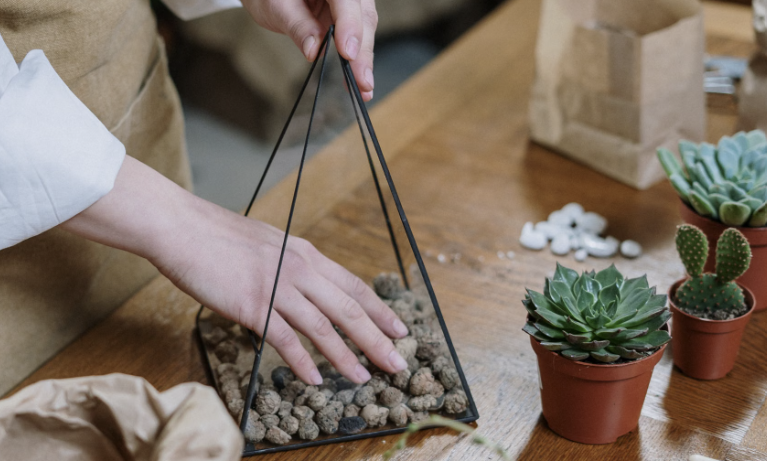
What Are Succulents?
Succulents are plants that store water in their leaves, stems, or roots. This allows them to survive in dry environments with very little rainfall.
Because they need much less water than most houseplants, they are one of the easiest plants to grow. They are also slow growers, making them perfect for terrariums.
Even though they are low maintenance, they still need proper care. Give them well-draining soil, bright indirect light, good airflow, and only water when the soil is dry.
The Best Succulents For A Terrarium
Choosing the best succulents is one of the most enjoyable parts of creating a succulent terrarium.
The best plants are usually small succulents that grow slowly and do not need much space.
Try choosing plants with different shapes, colours, and textures.
A mixture of upright plants, trailing plants, and rosette succulents will create a more interesting display.
Here are some of the best succulents for your own terrarium.
Jade Plant (Crassula Ovata)
The jade plant is one of the most popular succulent plants for indoor growing.
Also known as Crassula ovata, this plant has thick, glossy leaves that store water.
Because it is a slow grower, it works well in larger terrarium containers.
It also adapts well to indoor conditions.
Place your jade plant somewhere with bright, indirect light and allow the soil to dry between watering.
String Of Pearls
String of pearls is a unique trailing succulent with small, round leaves.
The leaves look like tiny green beads growing along delicate stems.
This creates a beautiful flowing effect inside an open terrarium.
It works especially well when planted near the edge of the container.
Over time, the stems can trail down and create a natural waterfall effect.
Zebra Plant (Haworthia Fasciata)
The zebra plant is one of the best succulents for beginners.
It has thick green leaves covered with white stripes.
These markings add texture and contrast to a succulent garden.
Unlike some succulents, the zebra plant does well in slightly lower light conditions.
It prefers bright, indirect light and only needs occasional watering.
Burro’s Tail (Sedum Morganianum)
Burro’s tail is a beautiful trailing succulent.
Its stems are covered with small, rounded leaves that store water.
Because of its hanging growth style, it looks amazing in glass terrariums with a large opening.
However, the leaves are delicate and can fall off easily.
Handle it carefully when planting or moving it.
Rosette Succulents
Rosette succulents create a flower-like shape with their leaves.
Popular examples include Echeveria and Sempervivum.
They come in many colours, including green, blue, pink, and purple.
Because of their symmetrical shape, they often become the centrepiece of a miniature garden.
Panda Plant (Kalanchoe Tomentosa)
The panda plant is a great choice if you want to add extra texture to your succulent terrarium.
It has soft, fuzzy leaves with brown edges, making it look different from many other succulent plants.
This hardy plant is also beginner-friendly. It needs little water and prefers bright, indirect light.
Because it grows slowly, it can stay looking beautiful inside a terrarium for a long time.
Lithops (Living Stones)
Lithops are some of the most unusual succulents you can grow.
They are often called living stones because they look like small pebbles sitting in the soil.
Their unique appearance makes them perfect for a natural-looking miniature garden.
However, Lithops need special care.
They need very little water and can quickly suffer if the soil stays wet for too long.
Jelly Bean Plant (Sedum Rubrotinctum)
The jelly bean plant is a fun and colourful addition to an open terrarium.
Its small, rounded leaves look like tiny jelly beans.
With enough light, the leaves can develop red tips, adding extra colour to your display.
It is also compact, making it a good choice for smaller terrarium containers.
Small Cacti
Although cacti are not technically succulents, they have very similar care needs.
They also store water and prefer dry growing conditions.
Adding small cacti can create a desert-inspired succulent garden.
Just remember to choose an open container and avoid too much water.
How To Create A Succulent Terrarium
Creating your own terrarium is easier than many people think.
The most important thing is creating the right environment before adding your plants.
A good planting process will help your succulents stay healthy and prevent common problems later.
1. Choose The Right Terrarium Container
Start by choosing an open terrarium container.
Succulents need plenty of airflow, so avoid closed glass containers.
A clear glass bubble bowl, fish bowl, or wide glass jar can work well.
The container should have a large opening to allow moisture to escape.
The size of your container will depend on the number of plants you want to include.
Remember, small succulents are usually the best choice because they do not need much space.
2. Add A Drainage Layer
Unlike normal plant pots, most glass terrariums do not have a drainage hole.
Because of this, you need to create drainage another way.
Start by adding a layer of rocks or fine gravel to the bottom of the terrarium.
Around two to three inches of gravel is usually enough.
This drainage layer catches extra water and keeps it away from the roots.
Without proper drainage, moisture can build up and cause root rot.
3. Place Sphagnum Moss
Next, place sphagnum moss above the drainage layer.
This creates a barrier between the rocks and the soil.
It helps stop the soil from falling into the gaps between the gravel.
Although this step is simple, it helps improve the overall health of your plants.
4. Add Succulent Potting Mix
Now add your succulent potting mix.
Succulents need soil that drains quickly.
Regular potting soil can hold too much moisture, which can damage the roots.
A specialist succulent mix usually contains materials like sand, grit, and perlite.
These ingredients help recreate the dry conditions succulents naturally enjoy.
5. Arrange Your Succulent Plants
Before planting, place your young plants inside the container first.
This allows you to experiment with different layouts.
Try combining different shapes and colours to create a balanced design.
For example, you could use:
- A jade plant as a centrepiece
- String of pearls around the edges
- A rosette succulent for extra colour
- Small cacti for height
Leave around an inch of space between plants.
This gives them room to grow and prevents overcrowding.
Long-handled tools can also make planting much easier, especially in narrow containers.
6. Add Decorative Elements
The final step is adding your personal style.
Decorative elements can completely change the look of your miniature garden.
You can add:
- Fine gravel
- Decorative stones
- Coloured sand
- Driftwood
- Miniature figurines
Some people even create a fairy garden inside their terrarium.
There is no right or wrong design.
Your terrarium should reflect your personal preference and creativity.
How To Care For A Succulent Terrarium
Keeping a succulent terrarium healthy is simple once you understand what the plants need.
Light
Place your terrarium in bright, indirect light. Avoid direct sunlight because the glass can become very hot and damage the leaves.
Water
Succulents need much less water than most houseplants. Wait until the soil is completely dry before watering again.
Minimal watering is always better than frequent watering. Too much moisture can quickly lead to root rot.
Soil
Always use a succulent potting mix. It drains quickly and helps keep the roots healthy.
Fertiliser
Feed your succulents once a month during spring and summer with a diluted succulent fertiliser. There is no need to feed them during winter.
Common Succulent Terrarium Problems
Even easy-care plants can sometimes struggle.
Luckily, most common problems are simple to fix.
Root Rot
Root rot is usually caused by too much water.
The roots become damaged when they sit in wet soil.
To prevent this, always use a drainage layer and avoid frequent watering.
Yellow Or Soft Leaves
Yellow or mushy leaves often mean the plant is getting too much water.
Allow the soil to dry completely before watering again.
If the problem continues, check that your container has enough airflow.
Plants Growing Tall And Thin
Succulents that stretch upwards are usually searching for more light.
Move your terrarium somewhere brighter with more indirect light.
Final Tips For A Healthy Succulent Terrarium
Creating a succulent terrarium is a fun way to enjoy plants indoors.
Remember these simple tips:
- Choose an open container with good airflow.
- Use a drainage layer at the bottom of the terrarium.
- Always use succulent potting mix.
- Provide bright, indirect light.
- Avoid direct sunlight through glass.
- Water only when the soil is completely dry.
- Choose small succulents that suit your container size.
- Add decorative elements to make it your own.
A succulent terrarium is a beautiful way to create your own miniature garden.
With the right selection of succulents, a suitable container, and proper care, your display can thrive for years.
The best part is that you do not need to be an expert gardener.
Succulents are naturally easy-going plants that reward you with beautiful shapes, colours, and textures.
Take your time choosing your plants, enjoy the creative process, and watch your miniature ecosystem grow.