
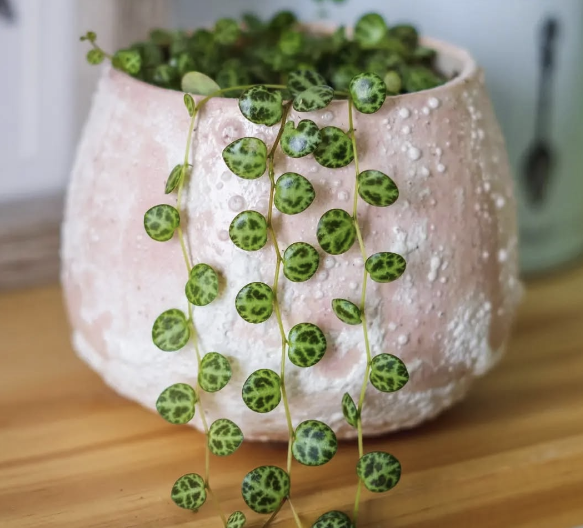
If you love unique plants, then the string of turtles plant is such a good choice. Its tiny leaves look like the shell of a miniature turtle. So it instantly stands out in any indoor plant collection.
Even better, it is a charming trailing plant that feels special but stays fairly easy with proper care. So let’s go through everything in a simple, friendly way.
Background
The common name is string of turtles, but its real name is peperomia prostrata. It belongs to the peperomia genus, which includes many small tropical plants.
This plant is native to the Brazilian rainforests in South America. In its natural habitat, it grows along tree trunks. It enjoys warm air, indirect sunlight, and moist conditions.
Because of this, it behaves like a delicate succulent-like plant indoors. It stores a little water, but still likes steady care.
How to Identify a String of Turtles
The String of Turtles has small, round leaves that are green with intricate white or light green veining, mimicking the appearance of a turtle shell. The leaves grow along thin, delicate stems that trail over the edges of pots or hang gracefully in baskets. It’s part of the Peperomia family, so it shares the characteristic thick, semi-succulent leaves.
Size
The String of Turtles is a small, slow-growing plant.
Height: Usually stays under 2 inches tall.
Length: The vines can grow up to 12-18 inches long over time.
It’s perfect for small spaces, windowsills, or as a trailing accent in your plant collection.
Care of String of Turtles Plant
Types
There are not many true types of peperomia prostrata. However, you may see slight changes in leaf shape or pattern.
Some plants have stronger white veins. Others have lighter green leaves or a “magic marmer” look.
All of them keep the same trailing vines and tiny turtle shells style.
Other peperomia plants include, watermelon peperomia, raindrop peperomia, and peperomia marble.
Light
Light is one of the most important parts of care.
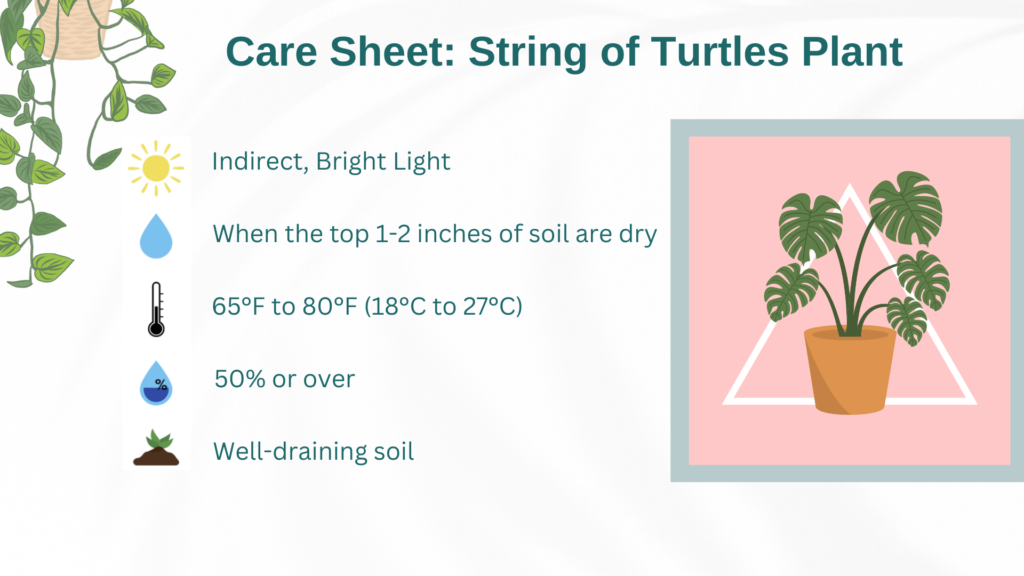
This plant loves bright indirect light. Think of a bright room without harsh direct sunlight.
Too much full sun can burn the delicate leaves. On the other hand, low light conditions can cause slow growth and lack of leaves.
So the best way is to place it near a window with filtered light. This helps healthy growth and keeps the pattern strong.
Water
Watering is where most people go wrong.
String of turtles plants do not like excess water. Overwatering can quickly lead to root rot.
Always check the top inch of soil. If it feels dry, it is time to water.
Use enough water so it drains from the bottom of the pot. Then let it dry slightly before watering again.
During winter months, water even less. The plant grows slower, so it needs less moisture.
Temperature
This plant enjoys a steady temperature range.
Keep it between 18–26°C for best results. It does not like cold drafts or sudden drops.
Because it is a tropical plant, warm conditions help it stay happy.
Humidity
Humidity levels matter more than you might think.
In its natural habitat, it grows in high humidity. So adding a bit of extra humidity is a good idea.
You can use a pebble tray or group plants together. This creates a humid environment without much effort.
Low humidity can cause dry leaves or slow growth.
Fertiliser
During the growing season, feeding helps encourage new growth.
Use a balanced liquid fertiliser every few weeks. This supports new leaves and stronger vines.
In winter, stop feeding. The plant is resting, so it does not need extra nutrients.
Soil (and how deep it should be)
Soil plays a big role in plant health.
You want a well-draining soil mix. A mix with peat moss, coarse sand, or succulent soil works well.
Good drainage is key to avoid root rot.
The pot does not need to be very deep. This plant has a small root system. So a shallow pot works well.
Just make sure there are drainage holes at the bottom of the pot.
Repotting
This plant likes being a little root-bound.
So you do not need to repot often. Only move it when the current pot feels too small.
Choose a slightly larger pot size. Too large can hold too much water.
Repotting during the growing season gives the best results.
Pruning
Pruning helps keep the plant neat and full.
Trim long vine-like stems to shape the plant. This also encourages bushier growth.
You can remove lower leaves if they look damaged. This helps the plant focus on healthy growth.
Propagation of String of Turtles Plant
Propagation is easy and very rewarding.
Use stem cuttings or vine cuttings with a leaf node. Place them in water or moist soil.
With warmth and indirect light, new roots will form.
This is a great way to grow new plants and fill out your pot.
Seasonal Care of String of Turtles Plant
During spring and summer, the plant is in its growing season. It will produce new growth and tiny leaves.
So it may need more water and light.
In autumn and winter, growth slows down. Reduce watering and stop fertiliser.
Keeping conditions steady is the best way to avoid stress.
Blooming (and how to encourage it)
Yes, this plant can bloom.
It produces small, light orange or cream flower spikes. They are simple, not showy.
To encourage blooming, give enough light and proper care during the growing season.
Still, most people grow it for its tiny turtle shells leaves, not flowers.
Common Problems
There are a few common issues to watch for.
Root rot is the biggest problem. It happens from too much water or poor drainage.
Lack of light can cause slow growth and pale leaves.
Too little humidity can lead to dry or curling leaves.
Keeping the right balance is the best way to avoid problems.
Pests
Common pests include spider mites and other small insects.
They often hide on the plant’s leaves.
If you notice them, wipe the leaves and treat with neem oil.
Regular checks help protect your plant.
Is It Pet Friendly?
Yes, this plant is generally safe.
It is not known to be toxic to pets. However, eating large amounts may cause mild stomach upset.
So it is still best to keep it out of reach of small children and pets.
Difficulty Level
The String of Turtles is a low-maintenance plant that’s perfect for beginners. Once you nail the balance of light, water, and humidity, it’s a joy to grow.
Why Choose a String of Turtles?
The String of Turtles is not only beautiful but also easy to care for, making it a standout addition to any indoor plant collection. Its compact size and trailing vines make it ideal for small spaces, terrariums, or hanging planters. Plus, it’s pet-safe and super rewarding to grow.
If you’re looking for a unique, low-maintenance plant with a touch of whimsy, the String of Turtles is the one for you
FAQ
How do I care for my String of Turtles plant?
Give it bright indirect light, light watering, and well-draining soil.
How do I make my String of Turtles fuller?
Trim the vines and propagate cuttings back into the same pot.
How fast do strings of turtles grow?
They have a slow growth rate, especially in low light.
Do strings of turtles like small pots?
Yes, they prefer small pots with good drainage holes.
Should I bottom water my String of Turtles?
Yes, it is a good idea. It helps control soil moisture.
What does an overwatered String of Turtles look like?
You may see yellow leaves, mushy stems, or signs of root rot.
Can I use orchid mix for String of Turtles?
Yes, but mix it with peat moss or soil for better moisture balance.
Where is the best place to put strings of turtles?
A bright spot with indirect sunlight works best.
What should you never feed a turtle?
This refers to real turtles, not the plant. Avoid feeding them harmful human foods.