
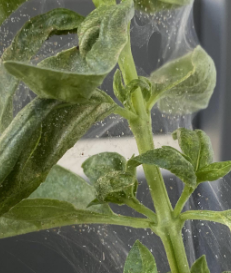
If you’re a plant lover, you know how frustrating pests and diseases can be. Luckily, there’s a simple, affordable, and effective solution that might already be in your home: hydrogen peroxide.
This guide will take you through the uses, how it can save your plants, and important tips you need to know.
What Is Hydrogen Peroxide?
Hydrogen peroxide (H₂O₂) is a chemical compound made of water and an extra oxygen molecule.
You might recognize it as the stuff you use to clean cuts and scrapes. However it’s also a powerful tool in gardening.
It’s clear, odourless, and comes in various strengths.
The extra oxygen in makes it excellent for killing bacteria, fungi, and other harmful organisms.
Is Hydrogen Peroxide Natural?
Yes and no.
Hydrogen peroxide isn’t exactly “natural” in the way plants or minerals are, but it’s not synthetic either.
It occurs naturally in the environment. Small amounts are even found in rainwater because of ultraviolet light.
The hydrogen peroxide you buy at the store is manufactured, but it’s safe and environmentally friendly when used properly.
Where Is Hydrogen Peroxide Used?
Hydrogen peroxide has many uses. People use it for cleaning wounds, disinfecting surfaces, whitening teeth, and even cleaning their homes.
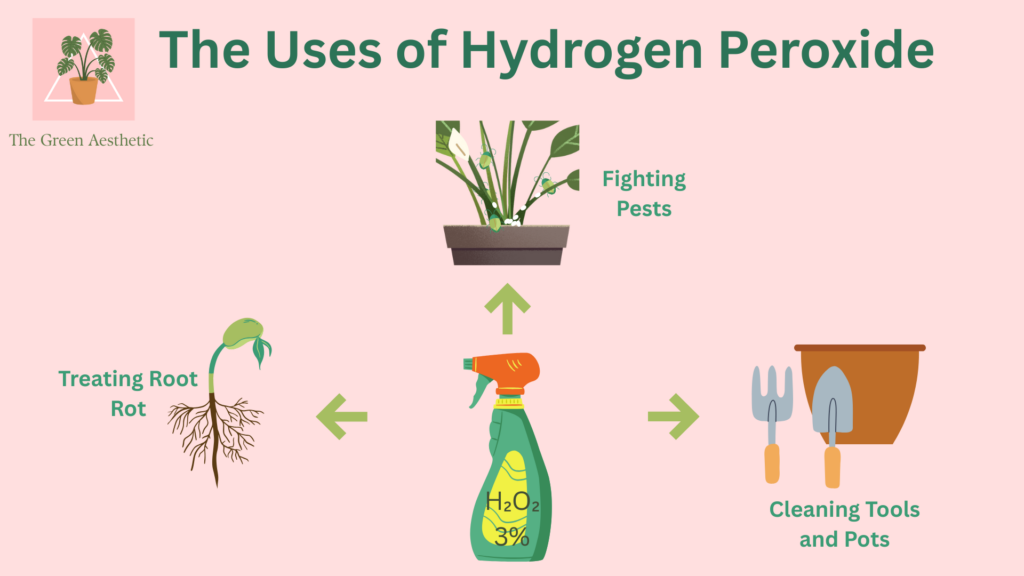
In gardening, it’s a lifesaver for fighting pests, treating root rot, and keeping tools and soil clean.
How Can Hydrogen Peroxide Help Plants?
Hydrogen peroxide is a versatile gardening tool. Here’s how it works:
Fighting Pests: The oxygen in disrupts the life cycles of pests. These include fungus gnats, aphids, and mealybugs. It can also sterilize the soil to kill eggs and larvae.
Treating Root Rot: Root rot happens when plants sit in overly wet soil and their roots start to decay. Hydrogen peroxide kills the fungi and bacteria causing the rot while oxygenating the soil.
Cleaning Tools and Pots: Infected pots or tools can spread diseases between plants. Hydrogen peroxide sterilizes them, stopping the spread of bacteria and fungi.
How to Use Hydrogen Peroxide in Your Garden
1. For Pests
- Disinfect Soil: Mix 1 part hydrogen peroxide (3%) with 3 parts water. Pour this mixture into the potting soil to kill eggs and larvae.
- Spray on Leaves: Mix 1 tablespoon hydrogen peroxide (3%) with 1 cup water. Spray this onto the foliage to kill pests.
2. For Root Rot
- Remove the plant from its pot and rinse the roots thoroughly.
- Mix 1 part hydrogen peroxide (3%) with 2 parts water. Soak the roots in the solution for about one hour.
- Repot the plant in fresh, well-draining soil.
3. For Cleaning Tools and Pots
- Mix equal parts hydrogen peroxide (3%) and water.
- Use this to wipe down scissors, pruning shears, and pots before reusing them.
Other Benefits of Hydrogen Peroxide for Plants
Improved Oxygenation: Hydrogen peroxide adds oxygen to the soil, helping roots “breathe” better.
Fungal Prevention: Regular use can prevent the growth of harmful fungi on leaves and soil.
Seed Germination: Soaking seeds in a mild hydrogen peroxide solution (1 tablespoon in 2 cups of water) before planting can increase germination rates.
Important Tips
- Always use 3% hydrogen peroxide unless otherwise specified. Stronger concentrations can harm your plants.
- Avoid using hydrogen peroxide too frequently. Use it as needed for problems or every few weeks for maintenance
- Test a small area before applying to the whole plant to ensure it doesn’t cause any damage.
Safety Warnings (Important to Read First)
Is hydrogen peroxide safe for pets and children?
Hydrogen peroxide should be stored out of reach.
Do not let pets drink treated water.
Allow soil to dry before pets touch it.
Never spray leaves where pets may lick them.
When should you NOT use hydrogen peroxide?
Avoid use if soil is already dry.
Do not use on stressed or weak plants.
Never mix with fertilizers or pesticides.
Do not use daily or weekly.
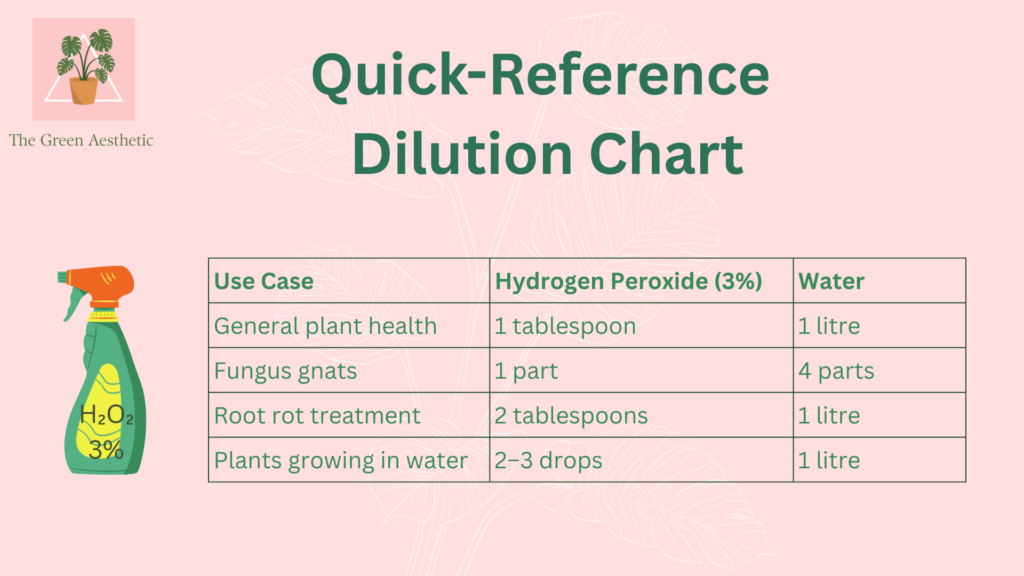
Quick-Reference Dilution Chart
FAQ
Is hydrogen peroxide good for plants?
Yes, diluted hydrogen peroxide helps oxygenate soil and control pests.
What ratio of hydrogen peroxide to water for plants?
Use 1 tablespoon of 3% hydrogen peroxide per litre of water.
Does hydrogen peroxide kill fungus gnats in plants?
Yes, it kills fungus gnat larvae in moist soil when diluted properly.
Can hydrogen peroxide help plants grow?
It supports healthy roots by adding oxygen to the soil.
With hydrogen peroxide, you can say goodbye to pests, root rot, and plant problems, and hello to healthier, happier plants! This affordable and effective solution is a must-have in every gardener’s toolkit.