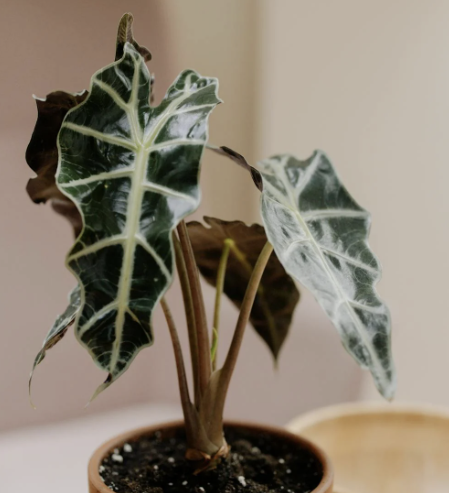
The African mask plant is one of those indoor plants that instantly grabs attention. Its dark green leaves, bold veins, and striking foliage make it a real statement piece.
You may hear it called Alocasia Polly or its full name, Alocasia x amazonica. Either way, it is a stunning indoor plant. However, it can be a little tricky. Once you understand its needs, though, it becomes much easier.
So let’s break down african mask plant care in a simple, clear way.
What is the African Mask Plant
The African mask plant is part of the alocasia plants group, often called elephant ear plants. It comes from warm, humid areas like Southeast Asia.
In its natural habitat, it grows under tree cover in tropical rainforests. That means it is used to warmth, filtered light, and high humidity levels.
Because of this, it can struggle indoors if conditions are not quite right.
Types
There are many alocasia varieties you might come across. The most common is Alocasia amazonica polly, known for its compact size and bold leaves.
You may also see alocasia longiloba or even alocasia zebrina, which have slightly different shapes and stems.
While they look different, their care is very similar.
Light
Light is key for healthy growth.
This plant loves bright indirect light. Think of a bright room with filtered light through a sheer curtain.
An east-facing window is often perfect. It gives gentle morning light without harsh sun.
Too much direct sunlight can cause brown spots. Too little light leads to slow growth and small leaves.
If your space is darker, a grow light can help meet its light needs.
Water
Watering can be tricky, so this is where most problems happen.
The general rule is to keep the soil slightly moist soil, but never soggy.
Check the top few inches of soil. If it feels dry, it is time to water.
Always use pots with drainage holes so excess water can escape. Sitting in water can quickly lead to root rot.
At the same time, letting it dry out too much can cause yellow leaves.
So aim for balance. Not too much water, not too dry.
Temperature
This is a true tropical plant, so it loves warmth.
Keep it in a space between 18°C and 27°C. Avoid cold drafts and sudden temperature drops.
It does best in stable, warm conditions, similar to tropical conditions.
Humidity
Humidity is where many people struggle.
The African mask plant needs a humid environment with high humidity levels.
Dry air can cause crispy edges and slow growth.
A pebble tray or a tray of water nearby can help. Grouping plants together also raises humidity.
If possible, aim for above average humidity rather than very dry air.
Fertiliser
During the growing season, feeding helps support new growth.
Use a liquid fertiliser at half strength every few weeks in spring and summer.
This helps produce strong new leaves and keeps the plant healthy.
In the winter months, stop feeding as growth slows down.
Soil
Soil is very important for this plant.
Use a well-draining soil mix. A blend of potting soil, peat moss, and orchid bark or coco chips works well.
This mix allows airflow and prevents water from sitting around the roots.
For depth, choose a pot that supports the root system but is not too deep.
The roots grow outward more than downward, so a medium pot size works best.
Always make sure there is good drainage at the bottom of the pot.
Repotting African Mask Plant
You will not need to repot often.
Every one to two years is enough, or when roots outgrow the pot.
Move to slightly larger pots with fresh soil to support growth.
The best way is to repot in spring, just before the growing season begins.
Pruning
Pruning is simple.
Remove yellow leaves, damaged leaves, or older growth.
This helps the plant focus on healthy new growth.
Always use clean tools and make neat cuts.
Propagation
Propagation is possible, but it is not as easy as some plants.
It is usually done by dividing the parent plant at the roots.
Each section can grow into a new plant, but it takes time.
Spring is the best time to try this.
Seasonal care for African Mask Plant
In spring and summer, the plant is active. You will see faster growth and more new leaves.
During this time, keep the soil lightly moist and feed regularly.
In the winter months, the plant may enter a dormant stage. Growth slows, and leaves may drop.
Reduce watering and stop feeding. Keep it warm and avoid cold spots.
Size and growth rate
This plant is a moderate grower.
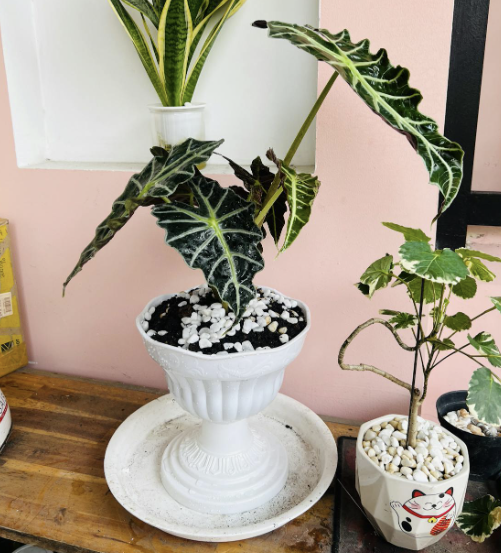
Indoors, it can reach around 1 to 2 feet tall. It stays fairly compact compared to other alocasia plants.
With the right conditions, you will see steady growth during the warmer months.
How to encourage blooming
African mask plants can bloom, but it is rare indoors.
They produce small, simple flowers. However, most people grow them for their magnificent foliage.
If flowers do appear, many people remove them. This helps the plant focus energy on leaves.
Blooms are not long-lasting and are not the main feature.
Common problems for African Mask Plant
Most issues come from watering and environment.
Yellow leaves often mean too much water.
Brown spots can come from low humidity or too much sun.
Drooping leaves may mean the plant is too dry or too cold.
Root rot is the biggest issue and usually caused by excess water and poor drainage.
Getting the right conditions is the key to avoiding problems.
Pests
Watch out for common pests like spider mites and scale insects.
These common houseplant pests feed on the plant and weaken it.
If you see signs, wipe leaves and treat with neem oil or insecticidal soap.
Checking regularly helps catch issues early.
Is African Mask Plant pet friendly?
No, it is not pet friendly.
It contains calcium oxalate crystals, which can cause irritation if eaten.
Keep it away from pets and small children.
Extra care tips for African Mask Plant
Keep your plant in a steady spot with good natural light.
Avoid sudden changes in its indoor space.
Use room temperature water when watering.
Consistency is the best way to keep this plant happy.
FAQ
How often do you water an African mask plant?
Water when the top few inches of soil feel dry. Keep soil lightly moist.
Why is my African mask plant dying?
It is usually due to overwatering, low humidity, or poor light.
How to care for African mask plants indoors?
Give bright indirect light, high humidity, and careful watering.
Why is Alocasia so hard to keep alive?
It needs very specific conditions, especially humidity and stable temperatures.
How long do African mask plants live?
With proper care, they can live for several years.
Do African mask plants go dormant?
Yes, they may slow down or lose leaves in winter.
How big does an African mask plant get?
Indoors, it usually grows to around 1–2 feet tall.
Why do people cut off Alocasia flowers?
To help the plant focus energy on leaf growth instead of blooms.