
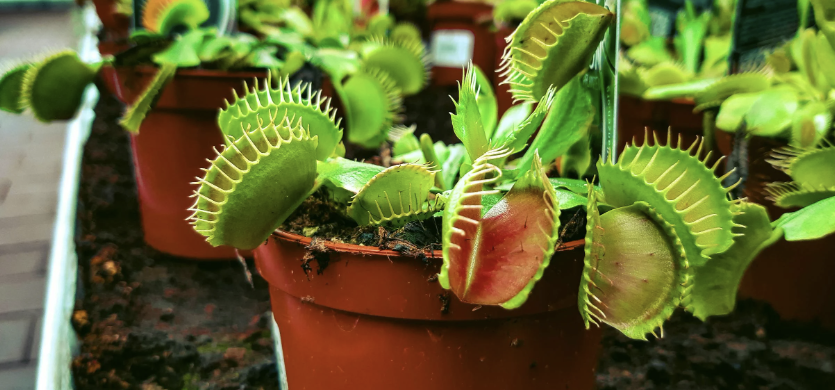
Venus flytraps (Dionaea muscipula) are some of the most fascinating carnivorous plants. Their jaw-like traps and delicate trigger hairs make them truly unique. But growing a big, healthy Venus flytrap can be tricky without the right care.
In this guide, we’ll cover everything, from types and light requirements to feeding, soil, dormancy, pests, and common problems. By the end, you’ll know how to help your Venus flytrap reach its maximum size and thrive.
Not sure which carnivorous plant is right for? Read my post on Best Indoor Carnivorous Plants: How To Choose Which Is Right For You
Understanding Venus Flytraps
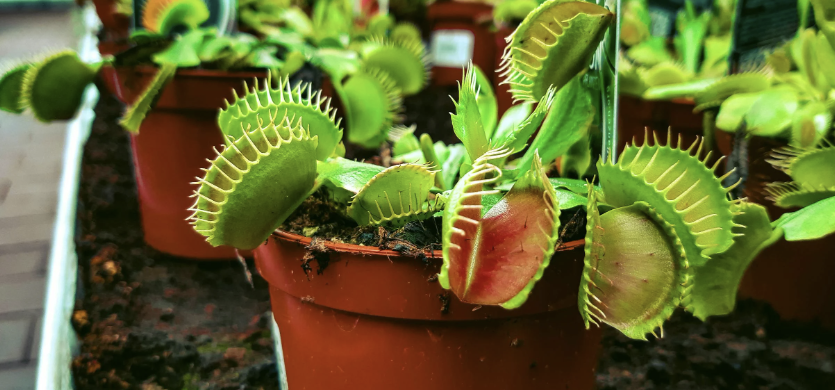
Venus flytraps are native to the coastal bogs of North and South Carolina. They naturally grow in nutrient-poor, acidic soils and enjoy full sun. These hardy plants survive mild winters and warm summers, making them ideal for USDA zones 7–10.
There are different forms of Venus flytraps. Some varieties stay small, while others grow large traps and flower stalks. Mature plants can produce multiple new traps each growing season, and healthy plants can live for 5–20 years.
Choosing the Right Type of Venus Flytrap
If your goal is a big Venus flytrap, start with a mature plant or a tissue culture plant. Tissue culture plants are clones grown in sterile lab conditions, often producing larger traps and faster growth.
Different forms affect growth, too. Some naturally produce larger traps, while others remain smaller. Picking the right variety is your first step toward success.
Light Requirements
Light is critical for Venus flytraps. They need lots of sunlight, ideally 4–6 hours of direct sunlight daily. Low light causes slow growth and small traps.
If your location has limited sunlight, artificial full-spectrum lighting is a good idea. This mimics natural sunlight and encourages strong trap growth.
Water and Soil
Venus flytraps are sensitive to water quality. Always use pure water, such as rain water, distilled water, or reverse osmosis water. Tap water may contain minerals that harm the plant over time.
The best soil mimics their natural bog habitat: a mix of sphagnum peat moss and sand. Avoid nutrient-rich soils or standard potting soil.
Keep the soil moist but not soggy, and use a shallow tray of water if humidity is low. Ensure the crown of the plant does not sit in water to prevent rot.
Temperature and Humidity
Venus flytraps thrive in warm summers and cooler winter dormancy temperatures. Ideal growing temperatures are 70–95°F. During dormancy, cooler temps around 40–50°F help the plant rest.
High humidity encourages growth, but Venus flytraps can adapt to moderate levels if other conditions are ideal.
Feeding Your Venus Flytrap
Venus flytraps are carnivorous plants, but feeding isn’t always necessary. Outdoor plants catch insects naturally. Indoors, small insects like fruit flies, ants, or tiny spiders are ideal.
Larger traps can handle mealworms or blood worms. Never feed human food, it can cause rot.
During winter dormancy, feeding is unnecessary, as the plant slows down its metabolism.
Potting and Repotting
Use a larger pot for bigger plants, it allows room for roots and new traps. Plastic pots with good drainage work best.
Repotting is best done in early spring, just as new leaves begin to grow. This minimizes stress and encourages growth.
Pruning and Flowering
Remove dead leaves and black traps to keep the plant healthy. Flower stalks with white flowers are beautiful, but young plants may benefit from removing them to save energy for new traps.
Mature plants can flower without significantly affecting growth.
Propagation
Venus flytraps can be propagated by:
- Leaf cuttings: Small leaf sections can grow new plants in moist soil.
- Division: Separate offshoots from mature plants during repotting.
- Tissue culture: Lab-grown clones produce fast-growing, healthy plants.
Propagation allows you to expand your collection and encourage healthier growth in older plants.
Common Problems
Even with proper care, issues can arise:
- Black leaves: Normal for old traps; can indicate low light or poor water quality.
- Pests: Aphids, spider mites, and fungus gnats. Remove manually or use mild insecticidal soap.
- Rot: Caused by poor drainage or tap water sitting in the crown.
Maintaining ideal light, soil, and water conditions prevents most problems.
Winter Dormancy
Venus flytraps need a winter rest period. Reduce watering and exposure to warmth. Leaves may die back, which is normal.
Dormancy lasts 2–4 months, depending on climate. Gradually increase light and water in late winter to trigger new trap growth in early spring.
Time Frame and Growth Rate
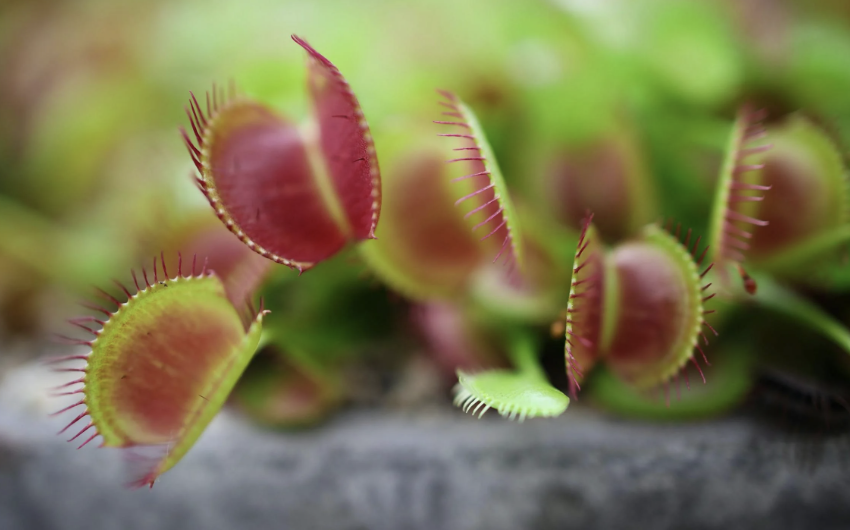
Young Venus flytraps grow slowly. It can take 1–2 years to reach adult size. With perfect conditions, traps reach their largest size in 3–5 years.
Patience is key. Steady care produces healthy, large traps and new leaves.
Tips for Growing Big Venus Flytraps
- Always use pure water like distilled or rain water.
- Provide lots of sunlight or artificial full-spectrum lighting.
- Keep soil moist, acidic, and mineral-free.
- Feed live insects only, not human food.
- Remove dead leaves and black traps.
- Use a larger pot for more root space.
- Allow a proper winter dormancy.
- Start with tissue culture or mature plants.
- Monitor for pests and diseases regularly.
By following these steps, your Venus flytrap will grow big and healthy, producing new traps, stunning flowers, and a long lifespan.
FAQ
How hard is it to keep a Venus flytrap alive?
With proper care, sunlight, pure water, nutrient-poor soil, and dormancy, they are not very difficult to maintain.
What will happen if a Venus flytrap bites you?
Nothing serious. The bite feels like a gentle pinch and is harmless.
How do you take care of a Venus flytrap?
Provide full sun, pure water, acidic soil, live insects, and allow for winter dormancy. Remove dead leaves and monitor for pests.
Why is my Venus flytrap turning black?
Old traps naturally die back. Black leaves can also signal stress from low light, poor water, or rich soil.
How long do Venus flytraps live?
With proper care, they can live 5–20 years. Tissue culture plants may grow faster initially.
Where are Venus flytraps native?
They are native to the coastal bogs of North and South Carolina.
What to feed a Venus flytrap indoors?
Small insects like fruit flies, ants, and tiny spiders. Larger traps can handle mealworms or blood worms.
Do you have to feed a Venus flytrap?
Not if grown outdoors. Feeding indoors helps if there are no live insects.
What to feed a Venus flytrap in winter?
Do not feed during dormancy.
How long does it take for a Venus flytrap to digest?
It usually takes 5–12 days, depending on trap and prey size.
Best soil for Venus flytrap?
A mix of sphagnum peat moss and sand works best. Avoid nutrient-rich soils.
Growing a big, healthy Venus flytrap takes patience, care, and attention to light, water, soil, feeding, and dormancy. With the right conditions, you’ll enjoy large traps, vibrant new leaves, and even white flowers.
If you love carnivorous plants, check out my other guides for more fascinating species:
- Butterwort Plant Care: The Fool Proof Guide for A Beautiful Plant
- Ultimate Monkey Cup Plant Care: The Complete Guide for Beginners
- How to Grow Scarlet Belle Pitcher Plant: Top Tips
Start your journey today and watch one of nature’s most wonderful plants thrive in your home or garden!