
If you want a plant that grows fast and looks soft and pretty, this is a good choice.
Tradescantia fluminensis ‘Lilac’ has pale purple tones and a gentle trailing habit.
It is often called an inch plant or wandering jew plant.
It grows quickly and fills a space with colour.
Even better, it is a low-maintenance plant once you understand the basics.
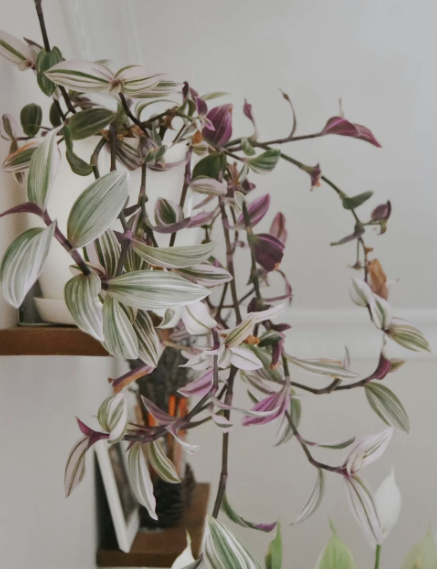
Background of Tradescantia fluminensis
This plant comes from South America. It grows as a ground cover in warmer climates.
It belongs to a group of tropical species called spiderwort plants. They are known for fast growth and easy care.
Indoors, it becomes a trailing houseplant. It works well in a hanging basket or on a shelf.
Types of Tradescantia
There are many tradescantia plants to explore.
You may see the deep purples of tradescantia pallida, also called purple heart.
You might also see tradescantia zebrina with bold white stripes.
There is also tradescantia fluminensis tricolor, which has mixed tones.
And then there are softer types like tradescantia lilac.
All of them share a similar care routine, but colours change with light.
Is Watermelon Peperomia Care Similar?
This is a good question.
Watermelon peperomia is also a tropical indoor plant.
It likes indirect light and moist soil, just like tradescantia.
However, tradescantia grows much faster.
It also needs more pruning to avoid a sad-looking houseplant.
So yes, they are similar, but tradescantia is more of a fast grower.
Light
Light is the most important part of care.
This plant loves bright light and indirect sunlight.
The more light it gets, the stronger the purple leaves will look.
In low light, you may see small leaves and fading colour.
So always aim for enough light.
Avoid harsh full sun, as it can burn the leaves.
Water
Watering needs balance.
Keep the soil slightly moist, but never wet soil. Soggy soil is the most likely cause of root rot.
Check the top inch of soil before watering. If it feels dry, give it a drink.
Good drainage is key. Always use pots with drainage holes.
Temperature
Tradescantia likes warm conditions.
Keep it between 18–26°C for optimal growth.
Avoid cold drafts and sudden changes.
It does not enjoy dry conditions or cold rooms.
Humidity
This plant prefers higher humidity.
It can still grow in normal homes, but a little extra helps.
A pebble tray or grouping plants is a good idea.
Low humidity can cause brown spots or dry leaves.
Fertiliser
During the growing season, feeding helps new growth.
Use a liquid fertiliser at half strength every few weeks.
This supports fast growers like this one.
In winter months, you can stop feeding.
Soil
Soil should be light and airy.
Use a well-draining soil with organic matter.
Add a handful of perlite for better drainage.
This protects the root system from sitting in water.
Repotting Tradescantia fluminensis
This plant is quite a fast grower, so don’t be surprised if it outgrows its pot fairly quickly. As a general rule, it’s time to repot when you notice the roots starting to fill up the current pot or poking out from the drainage holes.
When you do repot, only go up one pot size at a time. Moving to a pot that’s too large can actually cause issues with overwatering. Always choose a pot with proper drainage holes to help prevent water from sitting at the bottom and causing root rot.
The best time to repot is during the spring and summer months, when the plant is actively growing and can recover more easily from the move.
Pruning
Pruning is one of the easiest ways to keep your plant looking full and healthy. If left untrimmed, it can start to look a bit leggy, with long, sparse stems instead of a lush, bushy appearance.
To prune, simply trim the stems just above a leaf node (the point where a leaf grows from the stem). This encourages the plant to branch out, leading to a fuller shape and more leaves over time.
It’s also a good idea to remove any lower or damaged leaves as you go. This helps the plant direct its energy into healthy new growth and keeps it looking its best.
Propagation of Tradescantia fluminensis
One of the best things about this plant is how easy it is to propagate. If you’d like to grow new plants or share with friends, you can do so with simple stem cuttings.
Just take a cutting that includes at least one leaf node, and place it either in water or directly into soil, both methods work well. If using water, wait until roots have developed before transferring to soil; if planting directly, keep the soil lightly moist while roots establish.
With a bit of patience, you’ll start to see new roots forming, followed by fresh growth. Before long, you’ll have brand new plants to enjoy.
Seasonal Care
During spring and summer, growth is fast.
So the plant needs more water and light.
In winter, growth slows down.
Reduce watering and avoid cold spots.
Keeping a steady care routine helps avoid stress.
Plant Benefits
This plant adds colour and life to indoor spaces.
It is a true dopamine plant.
Its soft purple tones can lift a room quickly.
It is also great for beginners due to its easy care.
Common Problems
There are a few common problems to watch.
Yellow leaves often mean too much water.
Root rot happens in soggy soil with poor drainage.
Brown spots can come from low humidity or harsh light.
Leggy growth is caused by lack of light.
The best way to fix issues is to adjust light and watering.
Pests
Spider mites are the most common pests.
They can damage the plant’s leaves over time.
Check often and wipe leaves with a damp cloth.
Use neem oil if needed.
Diseases
Root rot happens when soil stays too wet, causing roots to turn mushy and leading to yellow leaves and a weak plant.
Leaf spot shows as brown or dark spots on the leaves, often caused by excess moisture or water sitting on foliage.
Powdery mildew appears as a white, dusty coating on leaves, usually from poor airflow and slightly humid conditions.
Stem rot causes soft, dark stems near the base of the plant, and is often linked to overwatering and poor drainage.
Is It Pet Friendly?
No, it is not fully safe.
Tradescantia can cause skin irritation in pets or people.
It may also cause mild stomach upset if eaten.
So keep it out of reach of pets and small children.
Other Types to Try
If you enjoy this plant, there are many similar ones.
Tradescantia zebrina ‘Violet Hill’ has bold stripes.
Tradescantia nanouk has candyfloss hues.
Each one adds something different to your collection.
Final Thoughts
Tradescantia fluminensis ‘Lilac’ is a fast-growing, beautiful plant.
With enough light and proper care, it becomes full and vibrant.
It is easy to grow, easy to propagate, and hard not to love.
FAQ
How to look after Tradescantia fluminensis?
Give it bright indirect light, moist soil, and good drainage.
Where is the best place to put a Tradescantia?
Place it near a bright window with indirect sunlight.
What are the common problems with Tradescantia?
Overwatering, low light, and pests like spider mites.
Is Tradescantia fluminensis easy to grow?
Yes, it is one of the easiest fast-growing plants.
How do I make my Tradescantia bushy?
Prune regularly and replant cuttings into the same pot.
Do Tradescantia like shallow pots?
Yes, they have smaller roots and enjoy shallow pots.
How to make Tradescantia more purple?
Give it brighter light. Light helps deepen the colour.
Can I put cuttings directly into soil?
Yes, stem cuttings root well in soil or water.
How do I prevent leggy Tradescantia?
Provide enough light and prune often.
What is the lifespan of a Tradescantia?
It can live for years with proper care and regular pruning.