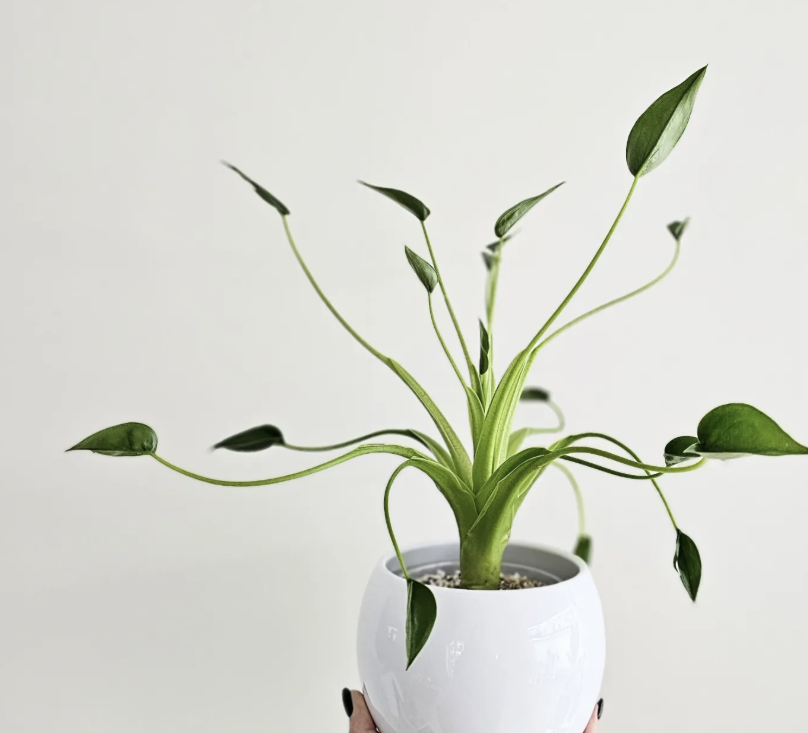
If you’re looking for a houseplant that turns heads, the Tiny Dancer plant could be exactly what you need. With its curved stems and quirky leaves, it looks as though it’s dancing in the breeze. In fact, that’s how it earned its name.
The Alocasia Tiny Dancer is one of the most unique indoor plants you can grow. It has all the tropical charm of larger elephant ear plants, yet it stays compact enough for shelves, workplace desks, and small spaces.
Better still, once you understand its needs, it can be surprisingly rewarding to grow. So, if you’ve recently brought home an Alocasia ‘Tiny Dancer’, or you’re thinking about adding one to your collection, this guide covers everything you need to know.
Background
The Alocasia Tiny Dancer is a hybrid plant developed from several Alocasia species. It belongs to the same family as Alocasia odora and other elephant ear plants.
Unlike many Alocasias, this variety was bred for its unusual shape rather than massive leaves. Its slender petioles hold small, cup-shaped leaves that appear to dance above the plant.
The plant has roots in the tropical regions of Southeast Asia, where many Alocasia species grow naturally in warm, humid forests.
Today, the Tiny Dancer Alocasia is loved by plant parents worldwide because of its compact size, unusual look, and vibrant foliage.
Types
While there is only one true Tiny Dancer, it is often compared with other compact Alocasias.
Popular alternatives include Alocasia odora, Alocasia brisbanensis, and smaller elephant ear varieties. However, none have the same dancing appearance that makes the Tiny Dancer so special.
Is Tiny Dancer Care Similar to Any Common Houseplants?
Yes. If you’ve cared for a Peace Lily or other tropical plants, you’ll find many of the requirements familiar.
Like most Alocasias, it enjoys bright indirect light, moist soil, warm temperatures, and high humidity. However, it tends to be a little more sensitive to low humidity and overwatering than beginner-friendly houseplants.
The key is finding the right balance.
Where to Grow and How to Style
Because of its compact size, the Tiny Dancer works beautifully in smaller homes.
Place it on a shelf, side table, or plant stand where its unique shape can become a focal point. Its upright stems create movement and interest without taking up much room.
A bright living room, office, or bedroom is often ideal. Pair it with other green plants to create a lush tropical display.
Just avoid placing it too close to radiators, air conditioning units, or cold drafts.
Light
Light is one of the most important parts of proper care.
The Tiny Dancer loves bright indirect light. A spot near an east-facing window often works well because it provides gentle morning light without harsh afternoon sun.
Too much direct sunlight can scorch the delicate leaves and cause leaf burn.
On the other hand, low light may slow growth and reduce the plant’s vibrant appearance.
If natural light is limited, place it near a bright window or use a grow light.
Water
Getting watering right is essential.
Keep the soil lightly moist during the growing season, but never allow it to become waterlogged. Check the top inch of soil before watering.
If the surface feels dry, it’s usually time for a drink.
Always use a pot with drainage holes to prevent standing water around the roots.
Too much water often leads to root rot, while too little can cause drooping leaves and poor growth.
During the winter months, reduce watering slightly because growth slows down.
Temperature
Tiny Dancer loves warmth.
Aim for temperatures between 18°C and 29°C. Standard room temperature conditions are usually perfect.
Keep the plant away from cold windows, cold draughts, and sudden temperature changes.
Warm temperatures encourage strong growth and healthy foliage.
Humidity
Like many tropical plants, the Tiny Dancer thrives in high humidity.
Higher humidity levels help keep the leaves healthy and prevent brown edges.
A pebble tray can help increase moisture around the plant. You can also group plants together or use a humidifier.
Low humidity often leads to crispy leaf edges and slower growth.
Fertiliser
The Tiny Dancer appreciates regular feeding during active growth.
Apply a balanced liquid fertilizer or balanced liquid houseplant fertilizer every two to four weeks during spring and summer.
Many growers prefer a diluted liquid fertilizer or diluted balanced fertilizer at half strength.
Avoid feeding during the colder months when growth naturally slows.
Organic fertilizers can also work well and support healthy growth over time.
Soil
For Alocasias, well-draining soil mix is essential.
Use a well-draining soil mix that contains potting soil, orchid bark, peat moss, and perlite.
This combination provides excellent drainage while still holding enough moisture for the roots.
Heavy soil that stays wet for long periods increases the risk of root rot. Read my guide on understanding soil for beginners if you need further help.
Repotting
Tiny Dancer enjoys being slightly snug in its pot.
However, when roots begin circling the pot or growing through the drainage holes, it’s time to move up a size.
Choose a larger pot that is only slightly bigger than the current one.
A plastic pot often helps retain moisture, while a decorative cover pot can improve the look.
Repotting is best done during the growing season.
Pruning
Regular pruning keeps the plant looking tidy.
Remove yellow, damaged, or dead leaves using clean scissors.
Pruning encourages fresh growth and helps the plant direct energy into healthy foliage.
A quick wipe with a damp cloth also keeps leaves clean and attractive.
Propagation
Unlike many houseplants, Tiny Dancer is not usually propagated through stem cuttings.
The easiest method is division.
During repotting, carefully separate offsets from the parent plant while preserving part of the root system.
Plant divisions into fresh soil and keep them warm and lightly moist.
Before long, you’ll have new plants to enjoy or share.
Seasonal Care
Spring and summer are the main growth periods.
This is the time for regular watering, feeding, and repotting.
During autumn and winter, growth naturally slows.
Reduce watering, stop fertilising, and protect the plant from colder temperatures.
Many plant parents worry when growth slows during winter. In most cases, this is completely normal.
Plant Benefits
The Tiny Dancer offers more than just good looks.
Its unusual shape adds character to any living space. It creates visual interest and works beautifully in modern interiors.
Because it stays compact, it’s ideal for apartments, offices, and smaller homes.
Its vibrant foliage also brings a calming touch of nature indoors.
How to Encourage Blooming
Tiny Dancer can produce flowers, although they are not the main attraction.
Healthy plants grown in warm conditions with plenty of light are most likely to bloom.
Provide consistent moisture, regular feeding, and bright indirect light.
Even so, many growers prefer the plant for its striking foliage rather than its flowers.
Common Problems
Most issues come from watering or humidity problems.
Yellow leaves often point to excess water or soggy soil.
Brown edges usually indicate low humidity.
Drooping foliage may signal underwatering, poor light, or root stress.
If growth slows dramatically, check light levels and inspect the roots.
Pests
Like many tropical houseplants, Tiny Dancer can attract pests.
Spider mites are among the most common.
You may also occasionally see mealybugs or scale insects.
Carry out a regular inspection of leaves, stems, and the undersides of foliage.
If pests appear, wipe leaves and treat with neem oil.
Diseases
The biggest disease concern is root rot.
This usually happens when soil stays wet for too long.
Signs include yellowing leaves, mushy roots, and a foul smell from the pot.
Good drainage and careful watering are the best prevention methods.
Fungal issues can also appear when airflow is poor.
Is Tiny Dancer Plant Pet Friendly?
Unfortunately, no.
Like other Alocasia varieties, Tiny Dancer contains calcium oxalate crystals.
If chewed, these crystals can cause irritation in cats, dogs, and people.
Keep the plant out of reach of curious pets and children.
Why Plant Parents Love Tiny Dancer
Many Alocasias are grown for their large leaves. Tiny Dancer offers something different.
Its dancing shape, compact habit, and unusual appearance make it stand out from almost every other houseplant.
It feels playful, elegant, and modern all at the same time.
If you’re looking for a plant that sparks conversation, this one rarely disappoints.
FAQ
Is Alocasia Tiny Dancer easy to grow?
Yes, it is fairly easy to grow once you understand its needs. Give it bright indirect light, warm temperatures, and high humidity for the best results.
Should I cut off dying Alocasia Tiny Dancer leaves?
Yes. Removing dying leaves helps the plant focus its energy on healthy new growth and keeps it looking tidy.
How often should I water a Tiny Dancer plant?
Water when the top inch of soil feels dry. The exact schedule depends on light, temperature, and humidity levels.
How big does a Tiny Dancer plant get?
Most mature plants reach around 12 to 24 inches tall and wide, making them perfect for small spaces.
Do Tiny Dancer plants like deep or shallow pots?
They prefer pots that comfortably fit the root ball. Avoid oversized pots, as they can hold too much moisture.
What is the lifespan of a Tiny Dancer plant?
With proper care, a Tiny Dancer can live for many years. Healthy plants often remain beautiful for a decade or more.
Conclusion
The Tiny Dancer Alocasia is proof that great things come in small packages. Its curved stems, playful leaves, and compact size make it a standout choice for any indoor plant collection. Give it bright indirect light, warm temperatures, and consistent moisture, and it will reward you with healthy growth and vibrant foliage. If you want a tropical plant with real personality, the Tiny Dancer is hard to beat.