
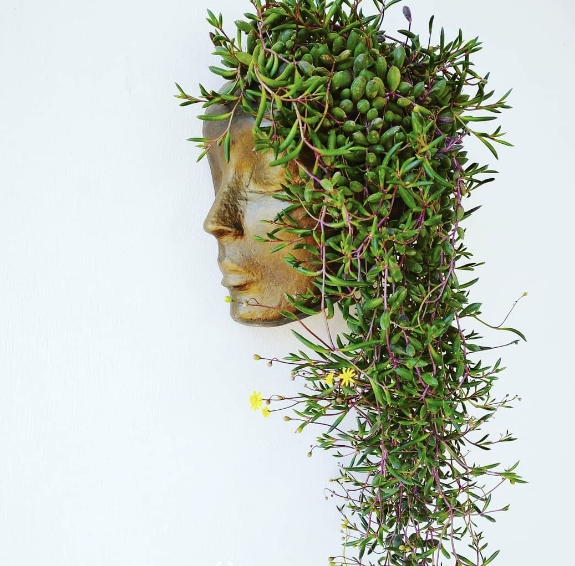
The Ruby Necklace Plant (Othonna capensis), also known as “String of Rubies,” is a unique and colorful trailing succulent that’s perfect for brightening up any room.
Its name comes from its bright ruby-coloured stems that look like strands of jewels when they grow long and drape over the pot.
Want to add more trailing plants to your collection? Read my blog post on Best Trailing Plants Indoor: Beautiful Vines That Transform Any Space
With its easy going nature and eye-catching color, the Ruby Necklace Plant is a fantastic choice if you’re looking for something different and want a pop of color in your indoor plant collection.
Want more help with your plants? Read my other plant care guides here.
How to Identify a Ruby Necklace Plant
The Ruby Necklace Plant is easy to spot because of its bright purple-red stems and plump, elongated leaves that range from green to purple, depending on the light it receives.
When exposed to lots of sunlight, the stems turn a deep ruby color, and the leaves take on shades of purple, adding to its jewel-like appearance.
It even produces small, daisy-like yellow flowers in bright light, which add another layer of charm to this beauty!
Size and How Fast It Grows
Ruby necklace will grow fast when happy. It produces long trailing stems that can reach around 30–60 cm in length. Sometimes even longer over time. This makes it perfect for a hanging pot or shelf.
With the right care, you will notice steady growth during the warmer months.
If growth slows, it often means not enough light.
Care of Ruby Necklace Plant
Light Requirements
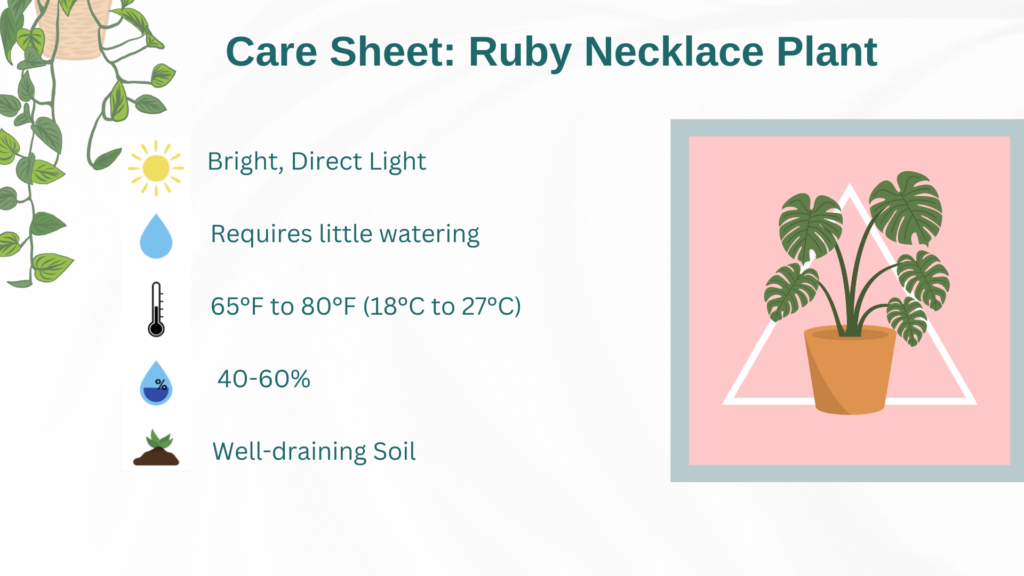
The Ruby Necklace Plant thrives in bright, direct sunlight.
It needs plenty of light to develop its stunning ruby color and to stay healthy. If you don’t have a spot with bright light, you can still grow it in indirect light, but the stems and leaves will stay more green than red.
If you want those rich ruby colors, place the plant in a south-facing window or use a grow light to make sure it’s getting enough sunlight.
Watering Needs
Since it’s a succulent, the Ruby Necklace Plant doesn’t need a lot of water and is prone to rot if overwatered. Let the soil dry out completely between waterings.
In spring and summer: Water once every 1-2 weeks, depending on the humidity in your home.
In fall and winter: Reduce watering to once a month, as the plant’s growth slows down during this time.
Check the soil by poking your finger an inch deep. If it feels dry, it’s time to water. Avoid letting water sit in the bottom of the pot.
Temperature
Ruby necklace plants like things warm and steady.
They do best in temperatures between 18–27°C. This is perfect for most indoor homes.
Because they are succulents, they do not like the cold. So, try to keep them away from cold drafts, open windows, and sudden drops in temperature.
If it gets too cold, the plant can become stressed. You may notice slow growth or soft leaves.
On the other hand, they can handle warmer conditions quite well. Just make sure they still get enough light.
In short, keep your plant warm, stable, and away from extremes. That is the best way to keep it happy.
Humidity
The good news is that this plant is not fussy about humidity.
Succulents prefer a dry environment. Normal indoor humidity is perfect. You do not need to mist the plant.
In fact, too much moisture in the air can cause problems. It may lead to rot over time.
So, keep things simple. A dry room works just fine.
Soil Requirements
The Ruby Necklace Plant needs well-draining soil to prevent root rot.
A succulent or cactus soil mix is ideal because it drains quickly. You can also create your own mix by combining regular potting soil with perlite or sand for better drainage.
Fertilizer
Feed your Ruby Necklace Plant with a diluted succulent fertilizer once every 4-6 weeks during spring and summer.
Avoid over-fertilizing, as too much fertilizer can cause leggy growth and weak stems.
Skip fertilizing during the fall and winter when the plant is in its resting phase.
Potting
Choose a pot with good drainage holes to avoid waterlogging the roots. Terra cotta pots are a good choice because they help the soil dry out faster. Repotting is usually only needed every 2-3 years, or when you see roots poking out of the drainage holes.
When repotting, only go up one pot size to avoid overwhelming the plant with too much soil.
Pruning
Pruning isn’t necessary for the health of the Ruby Necklace Plant, but you can trim back any overly long stems or damaged leaves to keep it looking neat and tidy. Trimming can also encourage the plant to produce new growth and keep it full.
Propagation
The Ruby Necklace Plant is easy to propagate through stem cuttings:
Cut a healthy stem with a few leaves.
Let the cutting dry out for a day or two to form a callus.
Place it in well-draining soil or directly in water to root.
Keep it in bright, indirect light and mist occasionally if planting in soil.
Once roots form, you can plant it in its own pot and watch it grow.
Seasonal Care
As the seasons change, your plant’s needs will shift a little.
In spring and summer, the plant is in its growing season. This is when you will see the most new growth.
During this time water a bit more often. Give the plant plenty of light, and feed lightly if needed.
Then, in autumn and winter, things slow down. This is a resting period for the plant. So, you should water less, stop feeding, and keep it in bright light.
By adjusting your care, your plant will stay healthy all year.
Do Ruby Necklace Plants Bloom?
Yes, they do, and the flowers are a lovely bonus.
Ruby necklace plants produce small, daisy-like yellow flowers. They usually appear during the growing season.
How to Encourage Blooming
If you want flowers, a few small changes can help.
First, make sure your plant gets plenty of bright light. This is the most important step.
Next, allow the plant a proper rest period in winter. This helps trigger blooming later.
And avoid overwatering, use well-draining soil, and feed lightly in spring.
Flowers do not last forever, but they can stay for several weeks.
With the right care, you may see blooms each year.
Pests
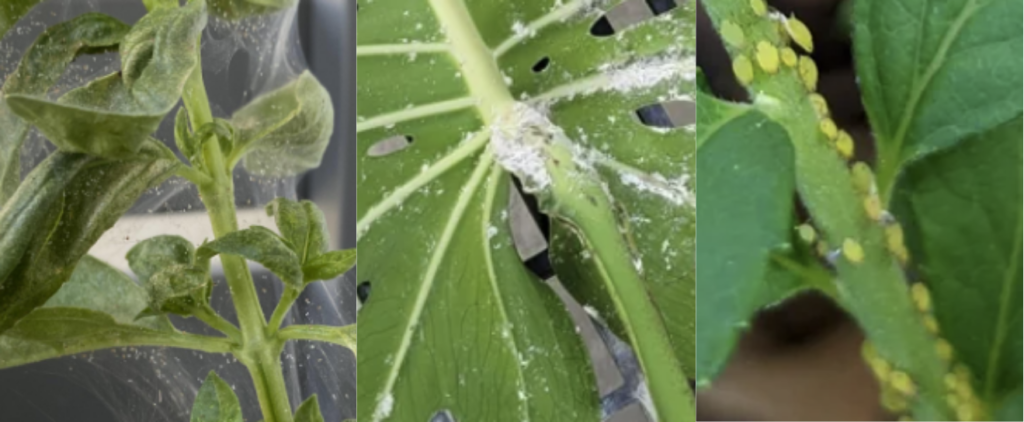
While generally hardy, the Ruby Necklace Plant can sometimes attract common pests like mealybugs, spider mites, and aphids.
Spider Mites: These tiny pests leave small webs on the plant. Wipe the plant down with a damp cloth and spray with insecticidal soap.
Mealybugs: These pests look like small, white cotton clumps. Remove them with a cotton swab dipped in rubbing alcohol.
Aphids: These small green or black bugs usually gather on new growth. You can remove them by spraying the plant with water or using insecticidal soap.
You should regularly check the plant for pests, especially if it’s outdoors for part of the year. Cleaning the leaves gently can help prevent infestations.
If pests become a problem, diluted hydrogen peroxide can help control larvae in the soil while improving root oxygen levels.
Diseases
The most common issue with Ruby Necklace Plants is root rot, which occurs from overwatering or poor drainage. Signs include yellowing leaves, mushy stems, and an unpleasant smell from the soil.
Root Rot: If you notice symptoms of root rot, take the plant out of the pot, remove any mushy roots, and repot in fresh, well-draining soil. Water less frequently to avoid the issue in the future.
Powdery Mildew: This fungal disease causes white powdery spots on the leaves. Improve air circulation around the plant and avoid getting the leaves wet when watering.
Is It Toxic?
The Ruby Necklace Plant is non-toxic to pets and humans, making it a safe option if you have curious pets or small children.
Common Issues
Here are some common problems you might face with a Ruby Necklace Plant and how to fix them:
Yellowing leaves: Usually caused by overwatering. Let the soil dry out completely before watering again.
Pale or green leaves: This often means the plant isn’t getting enough light. Move it to a brighter spot to encourage the rich ruby color.
Leggy growth: This can happen when the plant stretches for light. Trim back the stems and place it in a location with more direct sunlight.
Difficulty Level
The Ruby Necklace Plant is generally considered easy to moderate in terms of care.
As long as you don’t overwater it and give it plenty of light, it’s a pretty resilient plant that’s perfect for beginners and experienced plant parents alike.
The Ruby Necklace Plant is a unique succulent that adds color and personality to any indoor plant collection.
With its trailing ruby-red stems and vibrant green or purple leaves, it’s a true showstopper when it gets the light it needs.
By providing bright sunlight, careful watering, and well-draining soil, your Ruby Necklace Plant will thrive and add a pop of color to your home.
FAQs
Is Ruby Necklace easy to care for?
Yes, it is very easy to care for. It is a great choice for beginners and busy plant owners.
Why is my Ruby Necklace plant dying?
This is often due to overwatering or poor drainage. Too little light can also cause problems.
How often should I water my Ruby Necklace plant?
Water when the soil is fully dry. This is usually every 2–3 weeks, depending on your home.
How much sun does a Ruby Necklace need?
It needs bright light. Some direct sun helps bring out the deep ruby colour.
How often should I water a ruby plant?
Keep it simple, only water when the soil is dry. Avoid watering too often.
How big does a Ruby Necklace get?
It can grow long trailing stems up to 60 cm or more over time.
Can you propagate Ruby Necklace leaves?
Leaf propagation is difficult. Stem cuttings work much better and give faster results.